
December
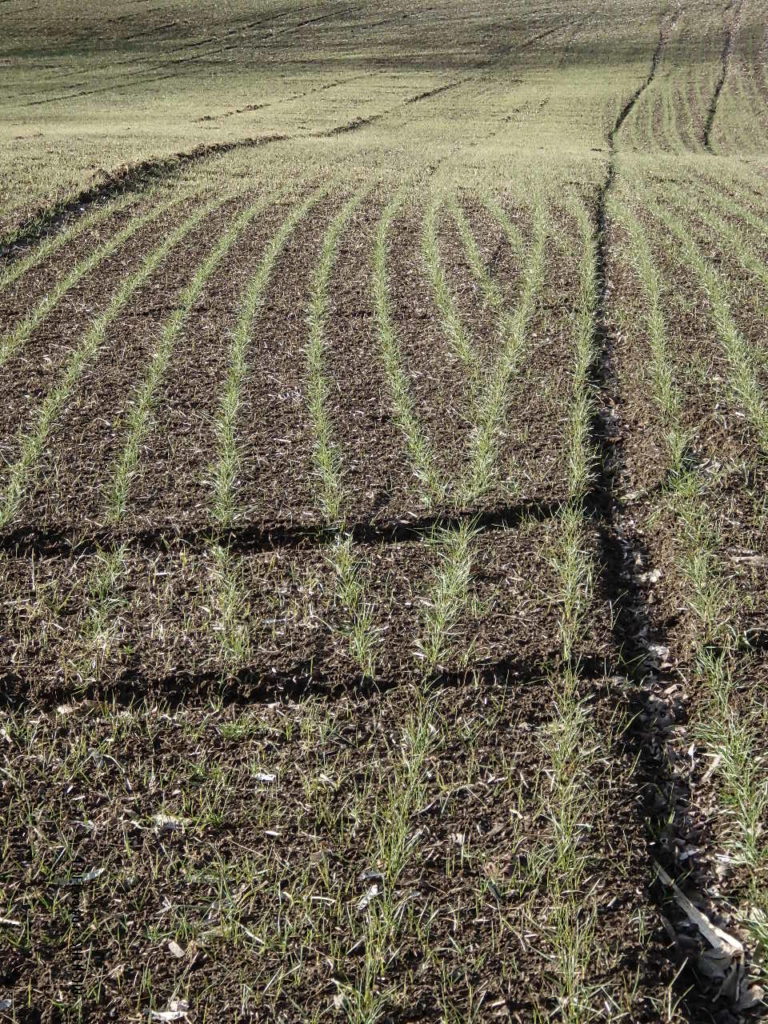
2025/12/31-2026/01/04 Wheat sprouts under snow
December 31st, 2025 – January 4th, 2026 is Winter – TOJI (Winter solstice)-66th KOU “Wheat sprouts under snow”
Story of SHICHIJYNIKOU calendar from the very end of 2025 to the beginning of 2026 is about “wheat.” Although it’s not yet the new year according to the lunar calendar…
Wheat seeds sown in the fall have grown into seedlings, painting many fresh green lines across the barren landscape. It’s a sign of spring.
That said, the weather is still quite harsh. The coldest times of the year, known as SHOKAN (lesser cold) and DAIKAN (greater cold), are yet to come.
Wheat harvest in this area varies depending on the variety, but it usually begins around early June. Until then, bear this cold and then turn into delicious UDON noodles and breads😋
*****
2025/12/26-12/30 Deer shed antlers
December 26th – December 30th、2025 is Winter – TOJI (Winter solstice)-65th KOU “Deer shed antlers”
In Japan, there is a traditional event, “Deer shed antlers.” it is said the event began as a way to ensure the safety of people’s living, because male deer with antlers become aggressive during mating season in the autumn. It’s held in KASUGA-TAISHA shrine usually at autumn every year.
Unfortunately, there are no deer around here. If you want to see them, you go to the mountains, even nearby mountains are fine.
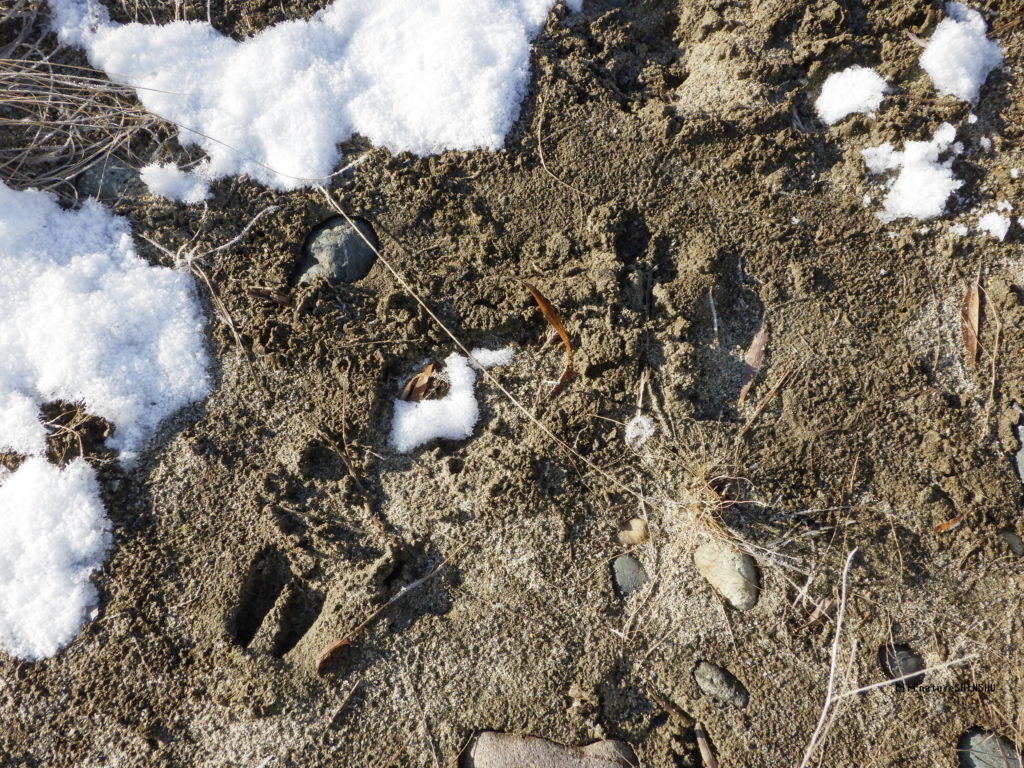
Meanwhile, I found several footprints that looked very similar to deer footprints on the riverbank along my walking route. They are wild boars’.
There was still some snow here and there, probably because of a light snowfall yesterday morning. It seemed the wild boar was checking and walking in areas where there was little snow. Was it difficult to walk on the snow because he/she was heavy? Or just doesn’t like the cold?
Anyway, I see lesser the footprints of the wild boar this year.
*****
2025/12/22-12/25 Self-heal sprouts
December 22nd – December 25th, 2025 is Winter – TOJI (Winter solstice)-64th KOU “Self-heal sprouts”
It’s the winter solstice.
Interestingly, on the SHICHIJYUNIKOU calendar, a plant appears that is said to “sprout” at this time of year when the days are shortest, and then withers and dies at the summer solstice, when the days are longest (in fact, the purple flower spikes turn brown towards the end of summer, which is why they appear to wither).
It is the NATSUKAREKUSA (Self-heal) meaning NATSU (summer)-KARE (withered)-KUSA (plants).
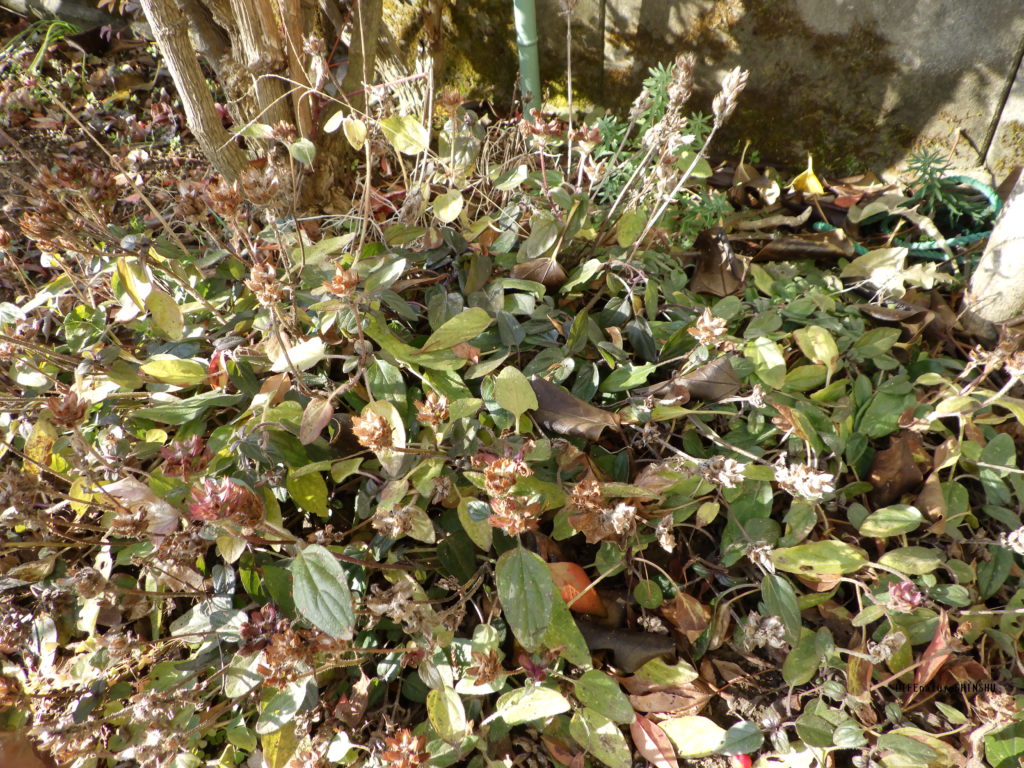
I planted two NATSUKAREKUSA in my garden last year, they are still very fresh as you can see the image, even at this time of year! If you look closely, some of the flower spikes still retain their purple color.
They seem to know how to enjoy the sunlight, even though it becomes at its lowest during this season.
*****
2025/12/17-12/21 Salmon gather and swim upstream
December 17th – December 21th, 2025 is Winter – TAISETSU (Greater snow)-63rd KOU “Salmon gather and swim upstream”
Apparently, salmon used to be caught in the SAI River basin. The river flows downstream into the CHIKUMA River, and there, people had been releasing salmon fries. Once they grew, the salmon eventually had swum upstream and came back to their home river.
It’s amazing how much power they have to swim up the river during this time of year (TAISETSU).
We have a relatively warm morning today.
Winter birds (probably common teals?) gather and float leisurely on the SAI River. They must have been on a long journey too. They must have been on a long journey too.

*****
2025/12/12-12/16 Bears start hibernating in their dens
December 12th – December 16th, 2025 is Winter – TAISETSU (Greater snow)-62nd KOU “Bears start hibernating in their dens”
This period, when the season has changed to winter, is usually described as “heavy snow,” but the artist’s choice to avoid using that term directly and instead use the bear to express the winter scenery is brilliant.
I always thought that bears stayed still in their dens during the winter, but it seems that there are many different types (new generation?) of bears. This year in particular, many bears have been spotted wandering around human settlements. They know that they can get foods around there, even during this winter season.
Considering such recent behavior of bears, I wonder how long description of the 62nd KOU will continue to effectively convey the sense of the season.
*****
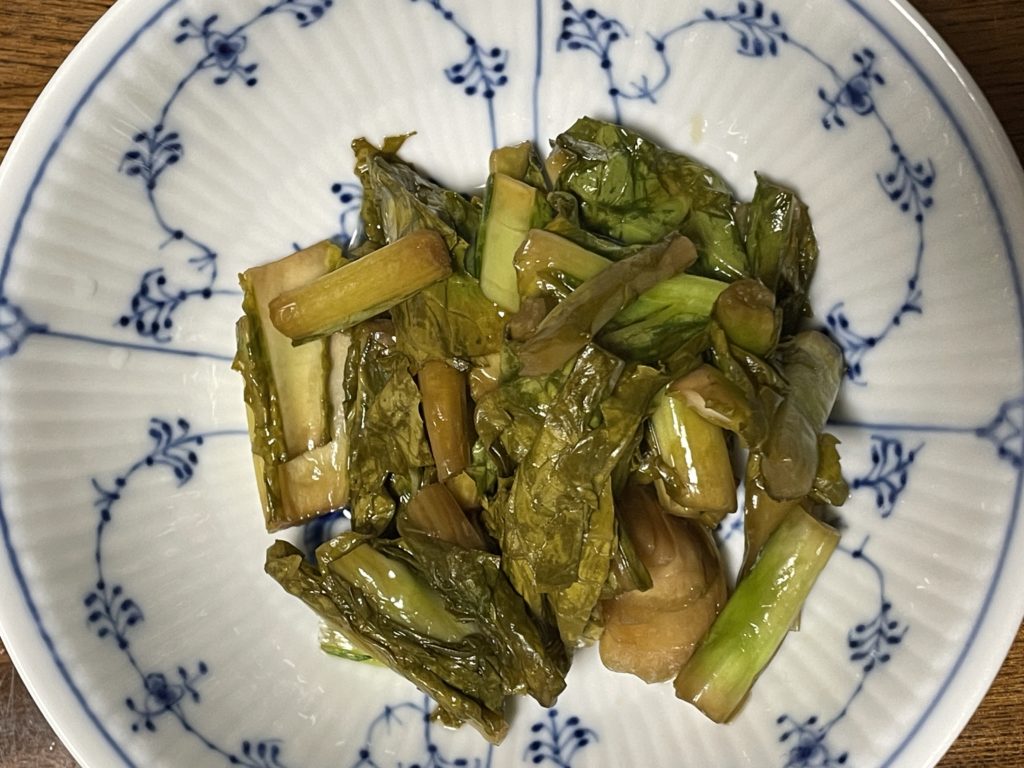
2025/12/12 LIFEnatureSHINSHU Special #6: NOZAWANA-ZUKE (pickled NOZAWANA)
NOZAWANA is a leafy vegetable, that are most familiar vegetable in SHINSHU.
The NOZAWANA-ZUKE (pickled NOZAWANA) has long been a popular food in SHINSHU, eaten as a preserved food during the harsh winter when food is scarce.
The one of my family is lightly pickled in soy sauce and seasoned with vinegar and MIRIN (sweet cooking SAKE).
It’s so delicious that we usually end up eating it all in a month, before the New Year. In my family, it’s not a preserved food ^^;
*****
2025/12/07-12/11 Cold sets in, winter begins
December 7th – December 11th, 2025 is Winter – TAISETSU (Greater snow)-61th KOU “Cold sets in, winter begins”
24 SEKKI (24 major seasonal points) is TAISETSU (Greater snow).
The first snow fell on December 4th around here and the minimum temperature has been below zero these days.
To do during this season is to protect the harvested vegetables from freezing. I have grown them with great care, right?
HAKUSAI (Chinese cabbage) wrapped in newspaper and piles up on the balcony, and DAIKON (Japanese white radish) and NINJIN (carrot) were buried again inside soil of my garden and will spend winter, actually inside of soil is warmer than air.
In orchard, young MOMO (peaches) trees wear new straw blankets 👍

*****
2025/12/02-12/06 TACHIBANA citrus fruits start to turn yellow
December 2nd – December 6th, 2025 is Winter – SHOSETSU (Lesser snow)-60th KOU “TACHIBANA citrus fruits start to turn yellow”
TACHIBANA citrus fruits are plants native to Japan and grow in warm climates, so they are not found in the cold climate of SHINSHU.
Fruits similar in color to TACHIBANA fruits but slightly larger that are often seen around here at this time of year include KAKI (persimmons) and KARIN (quinces).
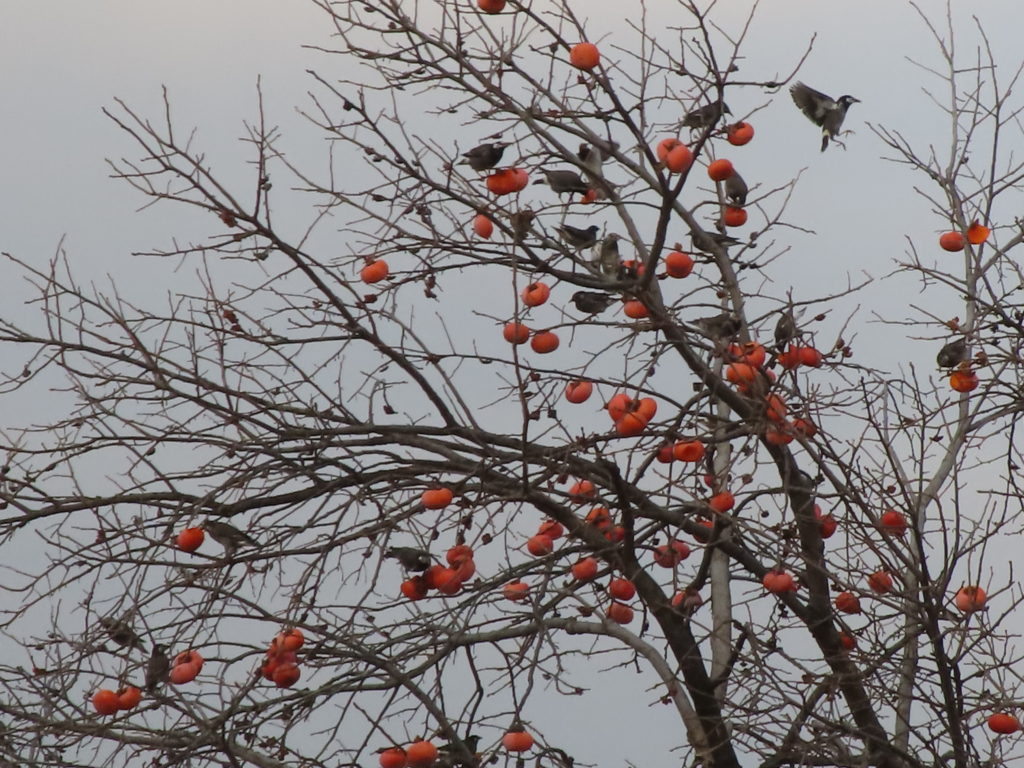
There is a large, beautiful KAKI tree on my usual walking route. It still has lots of fruit on it.
MUKUDORI (starlings) have gathered to eat the KAKI. While they are eating, other birds arrive and start fighting over them. There are plenty of persimmons, so no need to rush, right?
*****
November
2025/11/27-12/01 North wind blows the leaves from the trees
November 27th – December 1st is Winter – SHOSETSU (Lesser snow)-59th KOU “North wind blows the leaves of the trees”
The 24 SETSU (24 major division of year) is now SHOSETSU (lessor snow), meaning turning into snow from rain.
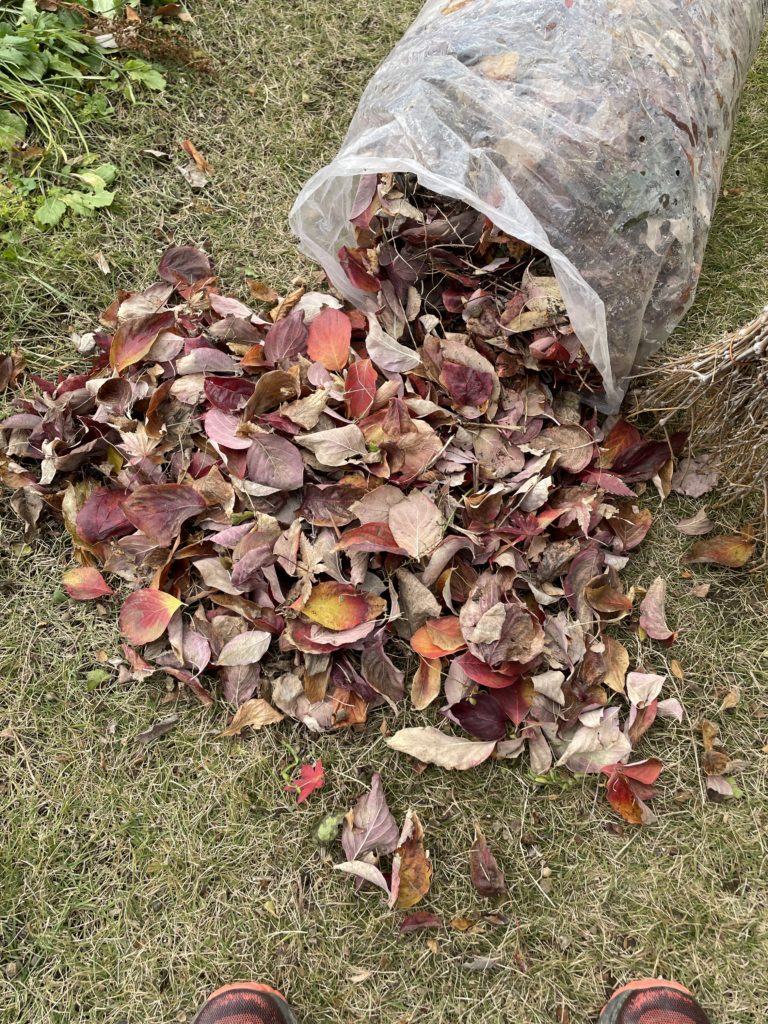
Last night’s strong winds and the rain that continued until this morning blew away most of the last leaves of the trees in my garden.
Tomorrow is “twig and leaf collection day” once a week and I swept up and gathered fallen leaves under the blue sky after the rain.
There weren’t that many today, but a week’s worth of fallen leaves is quite a lot.
*****
2025/11/22-11/26 Rainbows hide
November 22nd – December 26th, 2025 is Winter – SHOSETSU (Lesser snow)-58th KOU “Rainbows hide”
As the 58th KOU expected, it’s rare to see a rainbow at this time of year. Even if it does appear, it’s faint and disappears quickly. By the time you get your camera out, it’s gone.
From my experience, beautiful rainbows often appear when the sun starts to shine after a morning shower. That’s not the sky at this time of year.
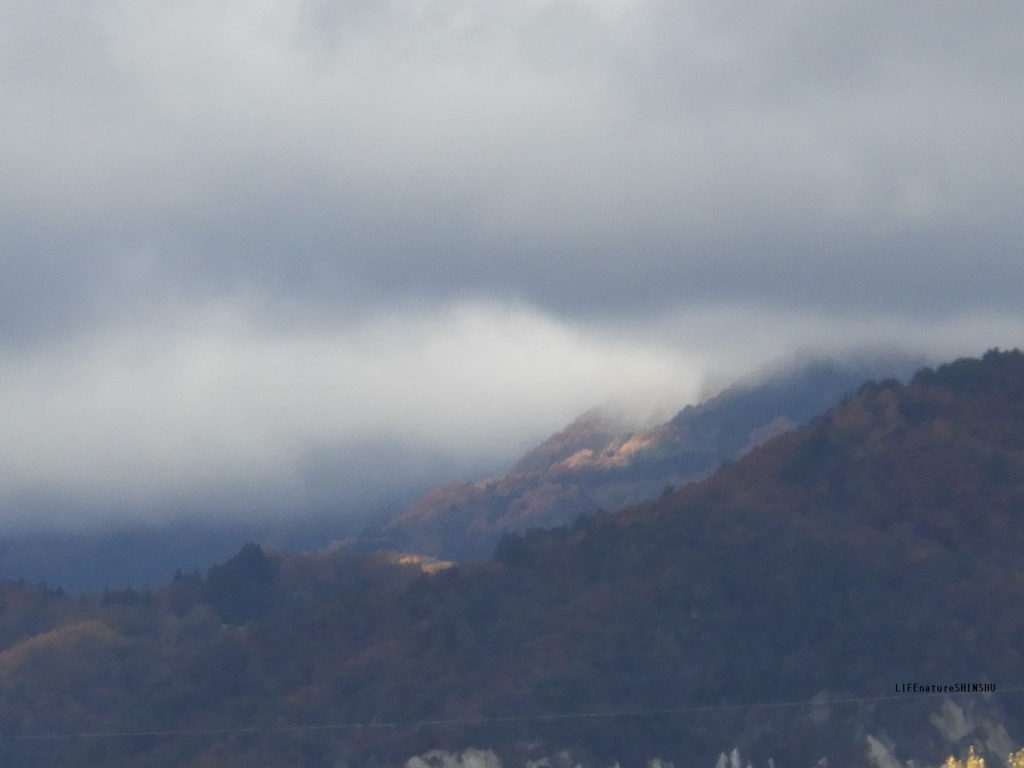
This morning, a faint ray of the sun-light filtered through the clouds illuminated the autumn leaves. It looked like a rainbow.
*****
2024/11/17-11/21 Daffodils bloom
November 17th – November 21st is Winter – Ritto (Beginning of winter)-57th KOU “Daffodils bloom”
Daffodils begin to bloom as autumn deepens, and continue to bloom one after another as winter gives way to spring. So, I think the author of the 57th KOU was conveying his thoughts about the warm, yet still distant, spring in the line “Daffodils bloom.”
Of course, in Shinshu, daffodils are a spring flower.
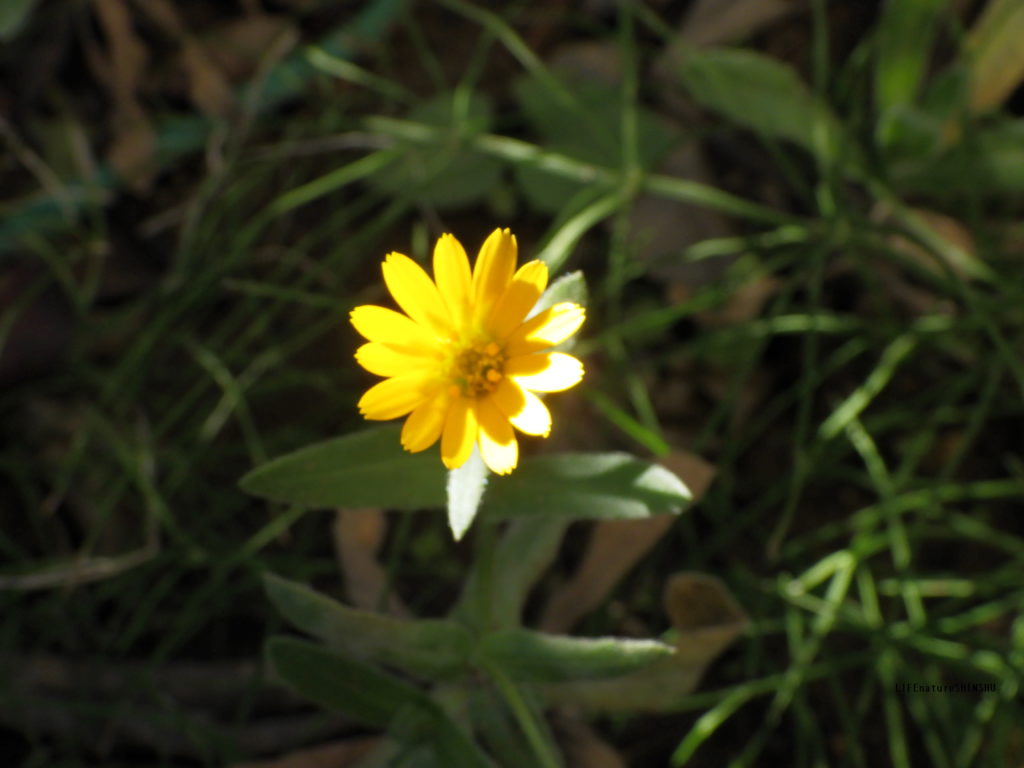
Sorry to call them a replacement, but wild HONKINSENKA (Calendula arvensis) have begun to bloom on the banks of the rice fields and farms in this area. They’re completely different flowers to daffodils and are also known as “flowers that know no winter.” They continue to bloom throughout the winter and into spring. They make flowers even in being buried under snow.
As the colors of the season is going into more monotonous, these tiny yellow flowers become even more and more adorable.
*****
2025/11/12-11/16 Land starts to freeze
November 12th – November 16th, 2025 is Winter –RITTO (Beginning of winter)-56th KOU “Land starts to freeze”
The frost has finally started, but actually it’s not “Land starts to freeze” yet.
The frost on the fluff of the dandelion that missed its flight has melted, creating polka dots. They sparkle and shine.
The HANAMIZUKI (dogwood) leaves in the garden have turned deep brick red and dark crimson. Spray mums are blooming with flowers in a variety of colors, including purple, yellow, pink and others.
In my kitchen garden, the SATOIMO (taro) stalks are turning brown. The HAKUSAI (Chinese cabbage) is a two-tone green and white. I love the
glossy bright red of the TOGARASHI (chili peppers).
I spotted a JHOBITAKI (Daurian redstart), a winter bird. Its orange tail is beautiful.
Recently, the temperature has dropped to around 3°C in the mornings, but there is plenty of sunshine during the day. It truly feels like “KOHARUBIYORI (Indian summer).”
On days like this, it’s before land starts to freeze, why not enjoy the colors that are unique to this time of year?

*****
2025/11/07-11/11 SAZANKA (Camellia sasanqua) blooms
November 7th – November 11th, 2025 is Winter – RITTO (Beginning of winter)-55th KOU “SAZANKA (Camellia sasanqua) blooms”
The lunar calendar marks RITTO. Following the Northern Japan Alps, Mt. IIZUNA (1,917m above sea level), a symbolic mountain of NAGANO City, also saw its first snowfall on November 5th. It was November 8th last year, so this is almost the same day. It melted during the day though.
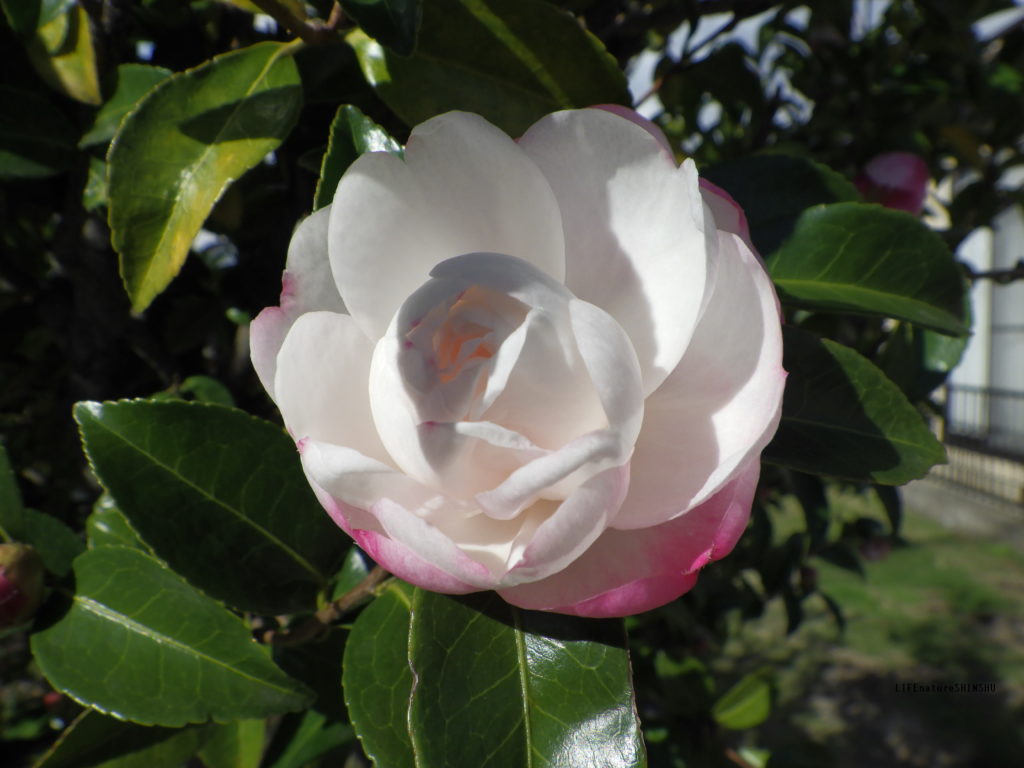
Now, the 55th KOU tells us the season is “SAZANKA flowers begin to bloom.” It’s nice to see flowers starting to bloom at this time of year when the number of flowers decreases as winter approaches.
The “usual SAZANKA” along my walking route have already bloomed from late October. It’s the earliest around here. They come in a variety of colors, from light pink to dark pink and to mottled. Just as this SAZANKA start to fall, other homes’ ones will bloom.
There are many homes in this area that have SAZANKA planted and you can enjoy them until early February.
*****
2025/11/02-11/06 Maple leaves and ivy turn yellow
November 2nd – November 6th, 2025 is Autumn – SOKO (Frost falls)-54th KOU “Maple leaves and ivy turn yellow.
We Japanese love watching the autumn leaves changing the color to red, yellow and brown. The 54th KOU, the last SOKO, tells the time has come.
From the end of October through today, November 3rd, the minimum temperature was often below 8°C. There were also days when it was 3°C or 5°C. The first snow fell on Mt. KASHIMAYARI, Mt. GORYU, and Mt. KARAMATSU in the Northern Japan Alps (October 29th). Temperatures are expected to drop even further from now.
Actually, for leaves to change color, it is important that the minimum temperature falls below 8°C. So, this year we can expect beautiful autumn leaves.
Today’s weather was exactly like the previous KOU (53rd KOU) “Light rains sometimes fall.”
Still, perhaps because the air was clear after the rain, I could clearly see SATOYAMA (a woodland near a village, living area) beginning to change the color, even though the sunlight was weak.

*****
October
2025/10/31 LIFEnatureSHINSHU Special #5; New SOBA (buckwheat noodle)
It’s just in time for new SOBA season.
I went to TOGAKUSHI for a good one.
I could take KENNO SOBA that was very special SOBA. It was offered to TOGAKUSHI Shrine this morning and was purified.
It was only available in limited quantities at special SOBA restaurants and inns.
The SOBA restaurant I visited was offering only 10 servings of KENNO SOBA, and I was lucky enough to get to try one of them✌

*****
2025/10/28-11/01 Light rains sometimes fall
October 28th –November 1st, 2025 is Autumn – SOKO (Frost falls)-53rd KOU “Light rains sometimes fall”
Rain at this time of year is called SHIGURE. It’s not a heavy downpour, but rather a brief rain that quickly subsides. It’s “Light rains sometimes fall.”
The weather in October hasn’t been great. Most days were cloudy with rain or light rain. It was as if we were experiencing the 53rd season in advance.
Today, the 28th, was a sunny day for the first time in a while. The sun came out in the morning. In the rice fields, puddles had formed from the rain that had fallen until then, and they sparkled in the morning sun. It was clear all day and into the evening.
Tonight, the moon is only half-lit (almost first quarter moon), but it is illuminating the surrounding area very gorgeous. The morning after a day like this, radiation cooling is often strong and the first frost may occur.

*****
2025/10/23-10/27 First frost
October 23rd – October 27th, 2025 is Autumn – SOKO (Frost falls)-52nd KOU “First frost.”
The 24 solar terms (SEKKI) are now the time when frost will fall. It says it’s about time for the first frost.
Although we haven’t yet reached frost, the cold weather recently has continued, fitting the description of the 52 seasons. The minimum temperature has finally dropped below 10°C. Since the temperatures have been higher than usual for several days, it feels even colder.
Yesterday, I turned on the gas fan heater for the first time this year. The KOTATSU (a traditional Japanese home heater, a table having a built-in heater covered with a blanket) has also been running for about 10 days already.
In the home garden, the sweet potato harvest is over, and I’ve been putting them at the shade place to enhance their sweetness. It’s been about three weeks, so they should be ready to eat now (^^♪
Preparations for the coming winter are steadily progressing.

*****
2025/10/18-10/22 Crickets chirp around the door
October 18th – October 22nd, 2025 is Autumn – KANRO (Cold dew)-51st KOU “Crickets chirp around the door.”
As autumn deepens, insects gather in search of a warm place such as the door of a house. “Crickets chirp at the door” expresses such seasonal feeling of KANRO (Cold dew).
Come to think of it, I haven’t heard the chirping of them much since Typhoons #22 and #23 passed on the sea close to HONSHU area, Japan.
It is said that Grasshoppers become less active when the temperature drops below 15°C. But the average temperature a day since the typhoons passed were around 18°C these days, so it should still be okay… However, there were several days when the minimum temperature was around 13°C.
It was my usual walking path, but after walking carefully for about an hour, I finally found them, only three 😥 Actually, 2-3 weeks ago, every time I stepped into the grass, several of them flied and ran away, though.
It was hard finding them, because each was all the same color as leaves or soil. Looking at the photo, can you tell which one is the one? It’s just a blade of grass.

*****
2025/10/13-10/17 Chrysanthemums bloom
October 13th – October17th, 2025 is Autumn –KANRO (Cold dew)-50th KOU “Chrysanthemums bloom.”
Along with SAKURA, chrysanthemums are one of the most beloved flowers among Japanese people. Starting around this time of year, chrysanthemum exhibitions are held all over the country.
The MAMEJIMA district of NAGANO City is the birthplace of the chrysanthemum known as “TOMOE NO NISHIKI.”
It is said that when MAEDA TOSHITSUNE, the lord of the KAGA domain, visited ZENKOJI Temple, he was known that the chrysanthemum had no name, so he gave it the name. Both “TOMOE” and “NISHIKI” represent family background and spirituality, and were beloved by SAMURAI.
There, the “TOMOE NO NISHIKI” chrysanthemum exhibition is held every year in early November. The photo is from last year.

*****
2025/10/08-10/12 Wild geese return
October 8th – October 12th, 2025 is Autumn –KANRO (Cold dew)-49th KOU “Wild geese return.”
We have entered KANRO (Cold dew) season, one of the 24 SEKKI (major divisions of solar terms). According to the lunisolar calendar, this is the time when winter birds are migrating and returning back to Japan.
I went to the “usual” spot for ducks spending winter season. As expected, I couldn’t find them yet.
Swans haven’t returned to AZUMINO yet, which is famous for their migration area. It seems that swan migration is often seen on days when the temperature is around 15 to 18 ℃.
The average daily temperature in Nagano City hovers around 20°C these days. It looks like we won’t be able to see them flying until it gets a little colder.
By the way, in rice fields where the rice harvest was over, birds such as sparrows, pigeons, and starlings are gathering in search of fallen rice ears.
If winter birds could migrate at this time, they would be able to get their hands on the “new” rice 😉

*****
2025/10/03-10/07 Farmers drain fields
October 3rd – October7th, 2025 is Autumn – End of SHUBUN (Autumn equinox)-48th KOU “Farmers drain fields.”
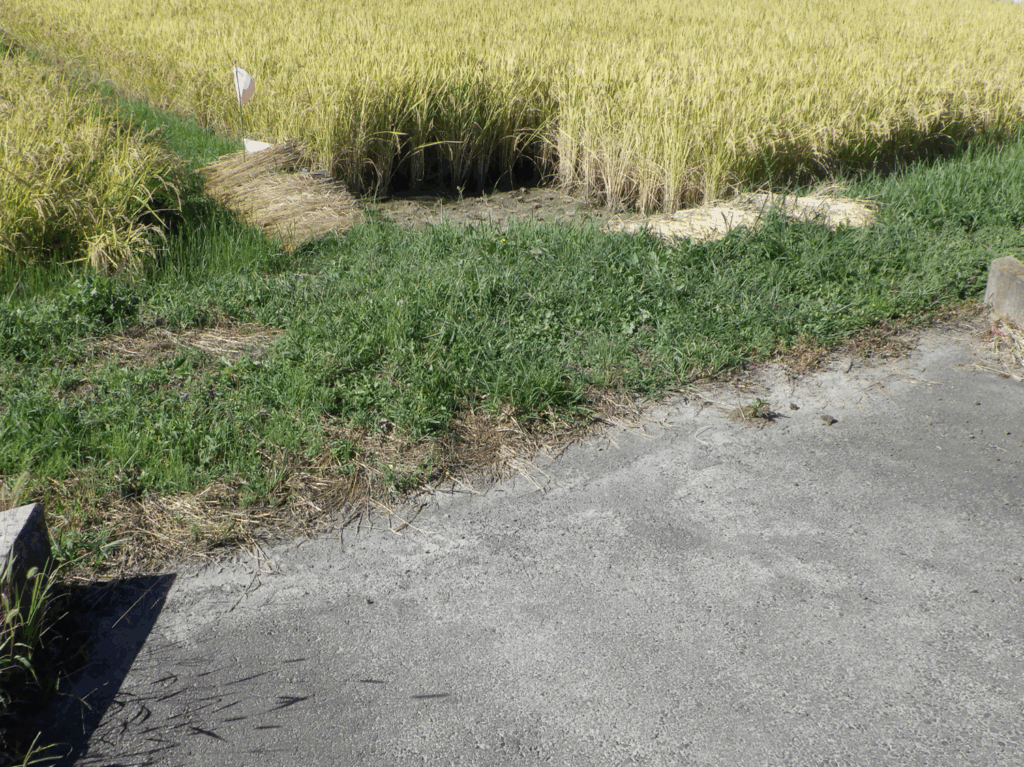
The 48th KOU tells us that it is harvest season, especially rice harvesting season in Japan.
“Farmers drain fields” is draining the water from the paddies and drying them out. An area where a rice binder and a combine harvester will be entering must be dried especially carefully, and some rice in a certain area are cut to easy to enter. This is an essential step for a safe and successful harvest.
And October 6th (August 15th on the lunar calendar) is known as the “CHUSHU-NO- MIGETSU” meaning Harvest Moon, a day to give thanks for the harvest.
In the past, farmers based their farming operations on the lunar calendar, so understanding the movement of the moon was very important. That’s why the CHUSHU-NO-NEIGETSU was adopted into the lunar calendar.
The neighborhood shrine is holding autumn festival for the full harvest.
*****
September
2025/09/28-10/2 Insects hole up underground
September 28th – October 2nd, 2024 is Autumn – Middle of SHUNBUN (Autumn equinox)-47th KOU “Insects hole up underground.”
Yesterday was the first day in a while that we had blue skies, a good day for doing in my vegetable garden, such as putting away summer vegetables, planting some autumn vegetables. And the most fun was digging up the soil to check on the condition of the sweet potatoes😊
When I turned over the leaves and stems, all kinds of insects got scared and ran away around. There were crickets, ground beetles, stink bugs, pill bugs, and other insects whose names I didn’t know. There were lots of them. I also found an inchworm!
Today’s forecast calls for a high of 29°C. Dear insects, it’s too early to be hiding in the ground.
*****
2025/09/23-09/27 Thunder ceases
September 23rd – September 27th, 2025 is Autumn – Start of SHUBUN (Autumn equinox)-46th KOU “Thunder ceases.”
The start of SHUUBUN (the autumnal equinox) is “Thunder cease” that means summer finally come to an end.
Summer weather is characterized by the appearance of cumulonimbus clouds, sudden flashes of lightning with a bang, and evening showers. However, I don’t remember these very well in this year’s summer.
Since September began, I’ve heard the sound of lightning several times. It wasn’t like the summer’s one, more of a rumble and lightning among the gray clouds that filled over the sky.
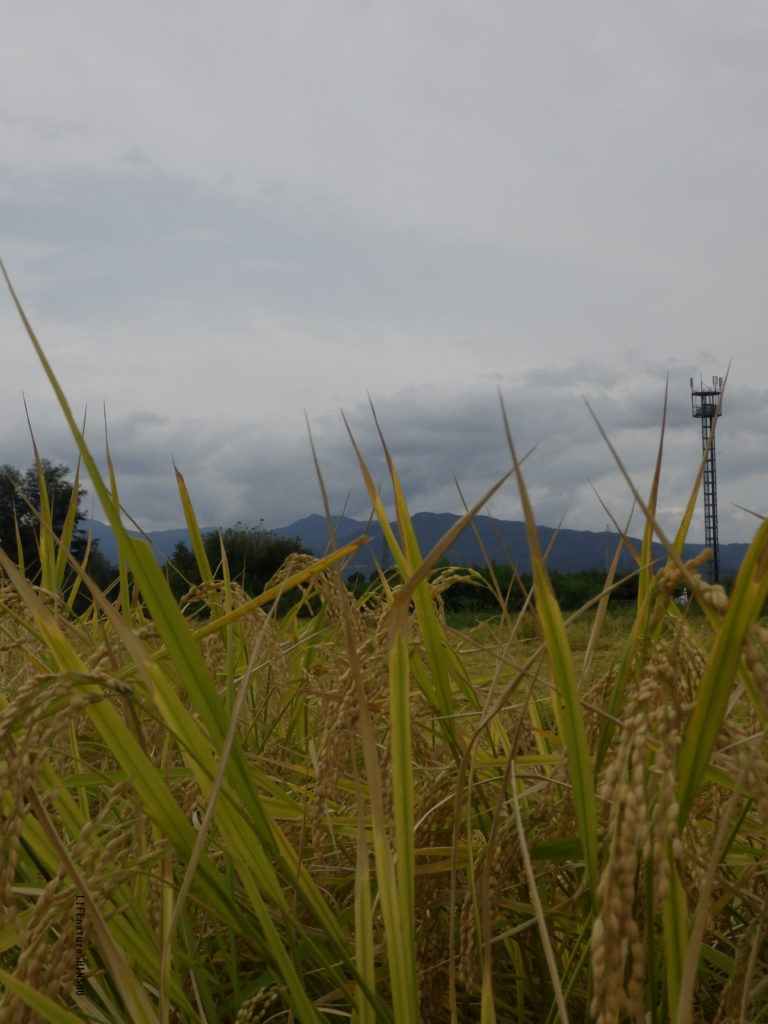
In the old days, it was said that if there was a lot of thunder around this time, there would be a good harvest. Today the sky is cloudy again. I don’t know if there will be thunder, but the ripe rice ears are a sign that the harvest season surely is approaching.
*****
2025/09/18-09/22 Swallows leave
September 18th – September 22nd, 2025 is Autumn – End of HAKURO (White dew)-45th KOU “Swallows leave.”
Swallows are summer birds that migrate to Southeast Asia when it gets cold in Japan. Untill then, both parents and young birds spend their time in large groups building roosts. I guess they feel safer in a group at a roost.
At the end of March this year, I spotted a large group of swallows flying around the SAI River. This was shortly after they had migrated to Japan.
So, I thought that perhaps they would leave around here, but there were no swallows to be seen anywhere. Have they already gone to warmer regions?
Come to think of it, it seems that I haven’t seen them from around the end of August. It was still hot in Japan at that time, although.
*****
2025/09/12-09/17 Wagtails sing
September 12th – September 17th, 2025 is Autumn – Middle of HAKURO (White dew)-44th KOU “Wagtails sing.”
Wagtails mainly live near water area. Both white wagtails and common wagtails can be seen around the SAI River.
Their chirping sounds match the autumn sky, especially in SHINSHU’s clear sky well. However, the autumn rain front has been stagnant for a while, so the clear autumn sky is hard to see. The wagtails also seem to be singing quieter than usual.
If you chase one, it will fly a little way ahead, stop, and walk around while swinging its long tail up and down. It doesn’t look like it’s trying to run away.
Japanese mythology says that the divine couple IZANGI and IZANAMI have learned how to have children by watching the movement of the wagtail’s tail.
*****
2025/09/07-09/11 Dew glistens white on grass
September 7th – September 11th, 2025 is Autumn – Start of HAKURO (White dew)-43rd KOU “Dew glistens white on grass.”
In the 24 SEKKI (Major divisions of the year), now it’s “HAKURO.” HAKU“ means white and “RO” is dew.
It’s getting cooler in the mornings and evenings. The lowest temperature this morning was 19°C at 5am.
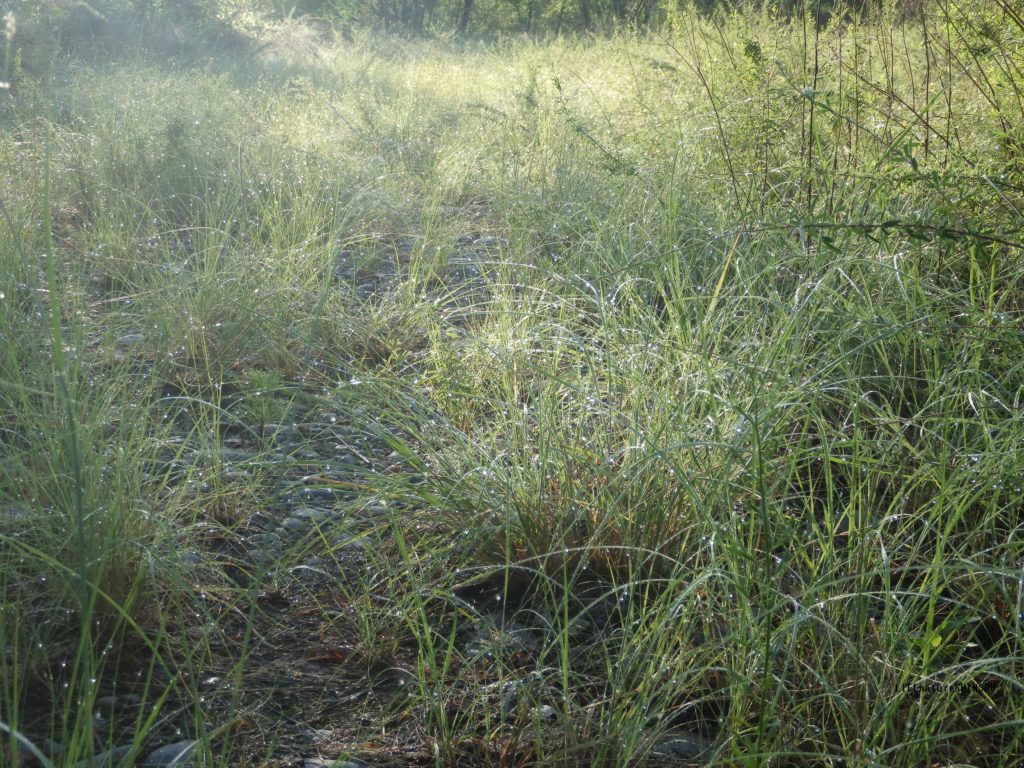
When radiation cooling occurs at night or early in the morning, the surface temperature of leaves of grasses and trees could drop below the surrounding air temperature. And the surface temperature drops below the dew point, causing morning dew to form on the leaves.
The 43rd KOU depicts the subtle change of seasons through the depiction of morning dew glistening on leaves.
There’s an old saying that goes, “a day with morning dew will be sunny”
This is because the radiative cooling that caused morning dew is often caused by high pressure at night and early morning, and the high pressure remains stable throughout the day.
So, will it be sunny today?
*****
2025/09/02-09/06 Rice ripens
September 2nd – September 6th, 2025 is Autumn – End of SHOSHO (Manageable heat)-42nd KOU “Rice ripens.”
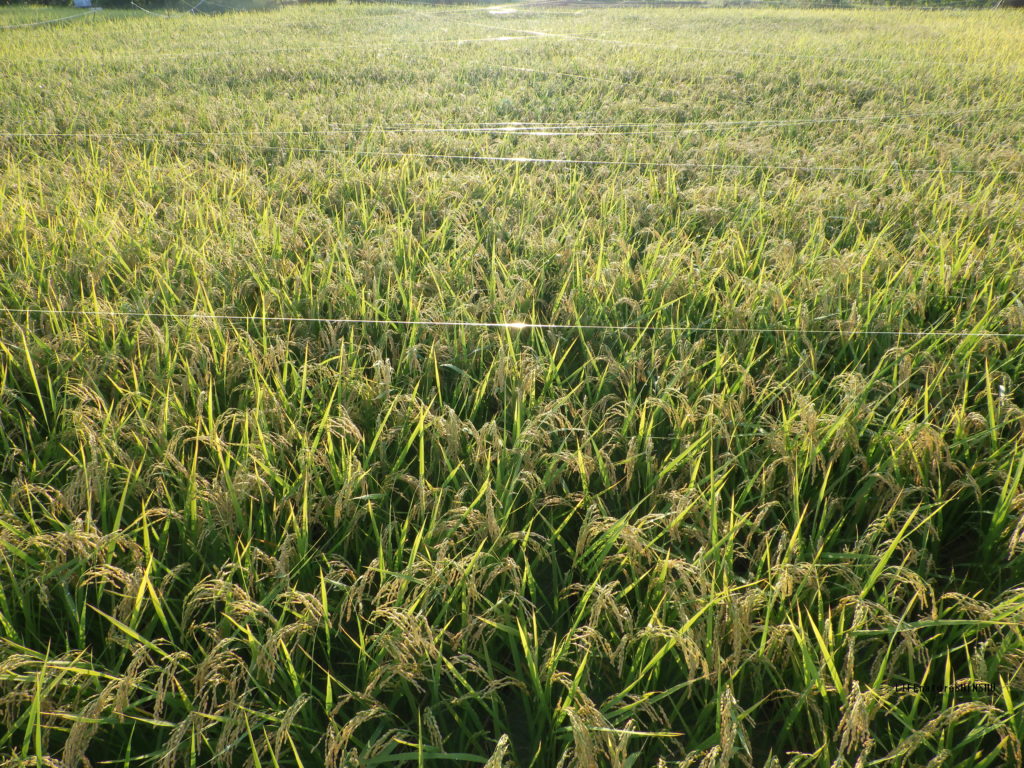
The 42nd KOU notices that it is finally time for rice (KOME) to ripen. It’s a long-awaited KOME season for the Japanese.
This year, we were worried about the growth of KOME due to the record heat and lack of rain. By the way, the Japan Meteorological Agency has confirmed that the rainy season began around May 22nd, and it ended around June 28th that was 20 days earlier than usual.
Even in IIYAMA City (Northern part of the HOKUSHIN Area) where was on the brink of drought, KOME harvesting started on August 28th. It was apparently unusually early.
Around here (Southern part of the HOKUSHIN Area), it seems to be growing well as the heads are starting to droop quite. Harvest usually starts around mid-September. Within the same HOKUSHIN area, there are big differences.
There has been plenty of talk about KOME shortages from last year to this year, so I wonder if the price of new rice (SHINMNAI) might rise. But I still want to eat SHINMAI !
*****
August
2025/08/28-09/01 Heat starts to die down
August 28th – September 1st, 2025 is Autumn – Middle of SHOSHO (Manageable heat)-47th KOU “Heat starts to die down.”
The Lunisolar calendar has reached the last week of August and the first day of September, the 47th KOU notices that summer season ended and enter Autumn, and the weather is manageable and comfortable.
It’s time for autumn fruits to be available. Actually, fruit cultivation is thriving in the HOKUSHIN area.
The delayed shipping of MOMO (peaches) has finished, and the harvest of Japanese-pear (NASHI) is coming to its peak.
Speaking of NASHI, a major convenience store has begun selling “GUYTTO- NASHI” ice bars, made with juice of NASHI that only grew in the SHINSHU region. According to the company’s website, the product, which was released in September last year, was so well-received that this year’s release date was brought forward to August and production was increased by 40%.
Worried that it would be sold out, I rushed to the store (^^; Another delicious product having connection with SHINSHU has been added to the lineup!
After MOMO, we can enjoy one delicious fruit after another, NASHI, BUDOU (grapes), RINGO (apples) and KAKI (persimmons), until early December.

*****
2025/08/23-08/27 Cotton bursts forth
August 23rd – August 27th, 2024 is Autumn – Start of SHOSHO (manageable heat)-40th KOU “Cotton bursts forth.”
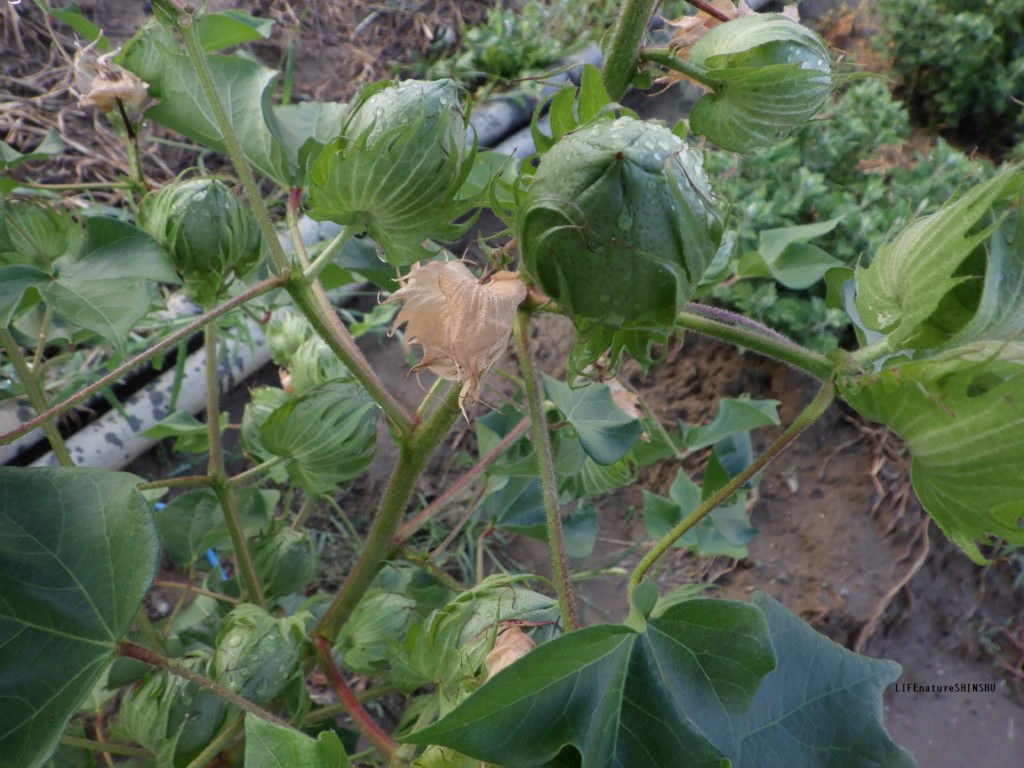
The season of 24 SEKKI (Major divisions) has progressed and now have entered SHOSHO (manageable heat). Although the heat of the summer still lingers, it is gradually subsiding. It’s the time when we can feel the beginning of autumn. The 40th KOU tells it’s time when cotton plants burst, open the wrap and the cotton appears.
I planted cotton seeds in the field, it was at the end of May. The seeds were collected last year and put away for over six months. First flowers bloomed at the end of July, and now the wraps are starting to swell nicely.
We have to wait for another month to get cotton after the 40th KOU’s information. Let’s look forward to the fluffy white one (^^♪
*****
2025/08/18-08/22 Thick fog descends
August 18th – August 22nd, 2025 is Autumn – End of RISSHU (Start of autumn)-39th KOU “Thick fog descends.”
According to the 24 SEKKI (Major divisions), it’s RISSHU (Start of autumn) and the SHICHIJYUNI-KOU tells that thick fog descends.
Cloud fog and radiation fog are likely to occur, especially in basins surrounded by high mountains. NAGANO City (ZENKOJI-DAIRA BONCHI) where I live is such a place.
The heat has been still intense even after the end of OBON, but the mornings and evenings have become a little comfortable. If I sleep with the windows fully open, sometimes I may find myself needing a thin blanket at dawn.

*****
2025/08/12-08/17 Evening cicadas sing
August 12th – August 17th, 2024 is Autumn – Middle of RISSHU (Beginning of autumn)-38th KOU “Evening cicadas sing.”
It was cloudy with light rain all day today. Because of the rain, the humidity was 94% and the temperature only rose to 25°C. It seems like the rainy season has been here for the past few days.
Perhaps because of the weather, the voice of the evening cicada’s singing seems less energetic than usual. When I hear it after sunset and as the light gets darker, I feel like midsummer is passing, and today I felt that even more.
We are currently in the OBON season, when ancestors are welcomed back to their families on the 13th (MUKAE-BON) and return to heaven on the 16th (OKURI-BON). During this time, we spend fun times together with our ancestors.
It says that autumn comes after OBON, but will this be the case again this year? The forecast says midsummer will come back again.

*****
2025/08/07-08/11 Cool breezes begin to blow
August 7th – August 11th, 2025 is Autumn – Start of RISSHU (Beginning of autumn)-37th KOU “Cool breezes begin to blow.”
According to the lunisolar calendar, this is the beginning of autumn, when cool breezes begin to blow.
Early morning today (8th), we had enough rain (I can’t remember the day of the last rain). And the temperature was 29 degrees. Even at the temperature, I think not only me to feel cool but also others. It’s a bit of a respite from the heatwaves.
FUJIWARA no TOSHIYUKI, a WAKA (traditional Japanese poetry) poet in HEIAN era, composed a poem about the scene during this season.
Autumn?
Can’t see clearly to the eyes, though,
The sound of the wind makes me realize suddenly.
Have you ever suddenly felt a cool breeze and thought “!”, have you? 😉

2025/08/07
*****
2025/08/02-08/06 Great rains sometimes fall
August 2nd – August 6th, 2025 is NATSU (Summer) – End of TAISHO (Greater heat)-36th KOU “Great rains sometimes fall.”
Extremely high temperatures in summer can cause atmospheric instability, resulting in heavy rainfall. The 36th KOU reflects this.
We are having scorching hot weather for two weeks over 35 ℃ though, there have been no great rains, not even showers.
In rice cultivation, NAKABOSHI* period has just ended, and water is starting to return to the rice paddies.
*Method of draining water from rice paddies for about a week to allow the rice plants to take firm roots and grow vigorously.

*****
July
2025/07/28-08/01 Earth is damp, air is humid
July 28th – August 1st, 2025 is Summer – Middle of TAISHO (greater heat)-35th KOU “Earth is damp, air is humid.”
Now season is right in the middle of the Great Heat. The 35th KOU tells us that the soil is moist and the weather is humid. A sudden shower in the midst of full sunshine makes the Earth damp and humid.
On July 18, the Japan Meteorological Agency announced that the rainy season in the Shinshu region had ended (later, the date was revised to around June 28th). Since the start of TAISHO (greater heat) on the 22nd, the hottest days of the year have continued.
Yes, It’s the summer time. But too hot!
Normally, there would be a few showers, but this year there has been very little. Even if there was rain, it was not enough to moisten the soil. Even though they are “summer” vegetables, they will wither and die if they are not watered every two or three days.
Come to think of it, there was very little rain during the rainy season either. In the rice-producing city of IIYAMA and the neighboring city of JOETSU (NIIGTA Prefecture), water shortages appear to be beginning to affect rice growth.

*****
2025/07/22-07/27 KIRI (paulownia) trees produce buds
July 22nd – July 27th, 2024 is Summer – Start of TAISHO (Greater heat)-34th KOU “KIRI (paulownia) trees produce buds.”
KIRI trees and flowers are considered sacred trees and are often used in the design of coats of arms and family crests. Incidentally, the “GOSHICHI-NO-KIRI” design is used as the symbol of the Japanese government. On the other hand, KIRI is popular for everyday items such as chests and wooden clogs, and is familiar to the general public.
SAKAE Village in NAGANO Prefecture is known for producing KIRI wooden clogs. The annual rings of KIRI trees become denser and more beautiful if they grow in more extreme the temperature difference. Actually, SAKAE Village is an area that receives particularly heavy snowfall even in SHINSHU Region. It makes sense that the KIRI industry is making good use of the region’s environment.
There is an old but magnificent KIRI tree on my walking route. Its flowers were in full bloom in early May, and soon after they started to bear fruit. At this time of year, the tree is forming buds, already preparing next year’s flowers.
There are still 10 months until these buds bloom next year. May they safely get through heavy seasons coming, the 34th KOU “TAISHO (great heat)” season in summer and the 61st KOU “greater snow” season in winter.

*****
2025/07/17-07/21 TAKA (hawks) learn to fly
July 17th – July 21st, 2025 is Summer – End of SHOSHO (Lesser heat)-33rd KOU “Hawks learn to fly.”
It’s just the time when young TAKA learn to fly. Why only TAKAs are featured?
TAKA have been considered sacred creatures and have been worshiped at shrines.
Falconry was a symbol of power, so feudal lords in the Edo period seemed to enjoy it. The NEZU family, who served SANADA NOBUYUKI, the lord of the MATSUSHIRO Domain, had a book on hawks, which described how to raise TAKA and method of falconry. The book was presented to successive TOKUGAWA SHOGUNS.
This is the season when not only TAKA but all living creatures prepare to leave the nest.
I often see herons, ducks, and crows. They are playing (teach how to live?) with their young. The nest where the swallows’ young were begging for food until recently is now empty.

*****
2025/07/12-07/16 First HASU (lotus) blossoms
July 12th – July 16th, 2025 is Summer-Middle of SHOSHO (lesser heat)-32nd KOU “First HASU (lotus) blossoms.”
The HASU flower has a deep connection with Buddhist teaching, it is depicted in paintings of paradise, and the pedestal on which the Buddha sits or stands is made of HASE flowers.
Originally, the idea of the SHICHIJUNIKOU was invented in ancient China, so it is not surprising that Buddhist ideas were incorporated into it.
When one thinks of temples in SHINSHU Region, the first thing that comes to mind is the famous ZENKOJI Temple (NAGANO City).
Every morning at the Temple, a memorial service called “OASA-JI” is held. The service begins with sunrise and series of the service end around 7 o’clock.
Interestingly, HASU flowers also begin to open lowly around sunrise, reach full bloom between 7 – 9 in the morning, and then return to buds before noon.

*****
2025/07/07-07/11 Warm winds blow
July 7th – July 11th, 2025 is Summer – Start of SHOSHO (lesser heat)-31st KOU “Warm winds blow.”
We have entered the “SHOSHO” season according to the 24 solar terms. Contrary to its name of “lesser”, hot days continue. The wind is more “hot” than “warm”.
The end of the rainy season, which was predicted to be early this month, is expected to be as normal as usual (later, the date was revised to around June 28th).
Humans are not the only ones feeling the heat.
Fans are busy in orchards. In fact, they are often used in early spring to protect fruit from frost. Even though it is still hot in the evenings, thanks to the fans, the fruit may be feeling a little cooler.
We have received news that peach harvesting has begun in the NANSHIN area (southern part of the SHINSHU Region). Here in the HOKUHIN area, they will come from late July.
*****
2025/07/01-07/06 HANGE (Crow-dipper) sprouts
July 1st- July 6th, 2025 is Summer – End of GESHI (Summer solstice)-30th KOU “HANGE (Crow-dipper, Pinellia ternate ) sprouts.”
Until the end of June, farmers have been doing hard on farm works, such as planting rice, harvesting wheat and onions, and cultivating fruit trees. At this time coming summer, the works even tougher.
It’s good to take a break from the work for a while. The 30th KOU lets us know the time. Actually, it suggest tha you should complete the works before “HANGE sprouts” and be relax for a while, and also should take nutritious foods such as TAKO (octopus), SABA (mackerel) and UDON noodles to build up strength for the harsh to harsh summer ahead.
SHINSHU region is far from the sea, so it is not clear whether people had the custom of eating such sea foods at that time.though,
in Ogawa Village, Kamiminochi District, Nagano Prefecture, it seems that people had the custom of eating NAGAIMO (gated yam) soup at this time of year. It’s still popular as a nutritious food ingredient. Udon noodles also is popular too, in the busy farming season, as they are easy to prepare.
Come to think of it, the 72 KOU phases for this time of year are full of healthy ingredients and medicinal herbs such as “UME”, “NATSUKAREGUSA”, and this “HANGE.”

*****
June
2024/06/26-06/30 HANASHOBU (Japanese (water) irises) bloom
June 26th- June 30th, 2025 is Summer-Middle of GESHI (Summer solstice)-29th KOU “HANASHOBU (Japanese (water) irises bloom.”
HANASHOBU is a type of irises and has been loved by Japanese people since old days. It is said that there are an astounding 5,000 different combinations of flower colors and shapes. Many municipalities have designated it as their official flower.
HANASHOBU looks beautiful in the rain, but this year’s rainy season in NAGANO City is a little strange. It began on June 10th (The Meteorological Agency Japan later revised the date to around May 22nd) and there were several rainy and cloudy days, after that hot-summer days with temperatures exceeding 30 degrees continued for one week. Today, the sunshine was very hot from the morning and a rain shower came in the afternoon. The maximum temperature was 30 degrees. It was a summer-like weather.
HANASHOBU here began to bloom in late May. They seem to be trying hard to bloom elegantly in time with the season, which is about two weeks earlier than usual.
The Japan Weather Association announced today that “the end of the rainy season is expected to be in early July, much earlier than usual.” (Later, the dae was revised to around June 28th.)

*****
2025/06/21-06/25 NATSUKAREKUSA (Self-heal) withers
June 21st- June 25th, 2025 is Summer – Start of GESHI (Summer solstice) – 28th KOU “NATSUKAREKUSA (self-heal) withers.”
The 28th KOU introduces NATSUKAREKUSA which literally means to wither and die around the time of the longest daylight hours as NATSU (summer)-KARE (die or wither)-KUSA (plants). And the 64th KOU last year also says it sprouts in winter.
Its withered flower spikes have been used as a traditional Chinese medicine since ancient times. So, people waited for them to wither. That’s why it appears twice in the SHICHIJUNI KOU calendar.
NATSUKAREKUSA in my garden, purchased at a flower shop in KARUIZW in July last year, began to bloom in mid-May, full bloom in early-June, and on the Summer Solstice, today, most of the flowers have turned brown and are dying.

*****
2025/06/16-06/20 UME (plums) turns yellow
June 16th- June 20th, 2025 is Summer – End of BOSHU (Grain bears and seeds) -27th KOU “UME turns yellow.”
The end of BOSHU is the season that UME (plums) ripen and turn yellow. It is also the time of the rainy season BAIU. BAI means UME, and U means rain.
From the morning today, It’s very hot around the HOKUSHIN Area. The Japan Meteorological Agency announced Heat Stroke Alert.
On such days, let’s borrow the power of UME to stay healthy, they say that the sourness of UME is good for your health.
I went to SHINSHU SHINMACHI (west neighborhood town of Nagano City) where is the largest producer of small UME around the HOKUSHIN area and got UME-SHOCHU (UME liquor) there.
But, before I had time to wait for the 27th KOU, the bottle was already empty ^^;

*****
2025/06/11-06/15 Rotten grass becomes HOTARU (fireflies)
June 11th- June 15th, 2025 is Summer – Middle of BOSHU (Grain beards and seeds)-26th KOU “Rotten grass becomes HOTARU (fireflies).”
HOTARU viewing is popular in Japan. Watching them gracefully flying around while glowing allows you to forget the muggy heat of the rainy season for a while.
HOTARU have another Japanese name “rotten grass.” Is there any relationship between them?
HOTARU larvae emerge from the water and become adults in holes dug in the soil. Since they glow even as larvae, people in the past who saw something with glowing crawl out might believe that rotten grass becomes HOTARU. In a sense, it can be said that they had a very high interest in nature.
The rainy season began in SHINSHU Region on the 10th (The Meteorological Agency Japan later revised the date to aound May 22nd). HOTARU tend to fly around on humid and cloudy days, so it’s the season when HOTARU fly around as the 26th KOU says.
They say that the best time to see HOTARU around NAGANO City is from mid-June to early July, but the weather forecast for next week is calling for many sunny days with temperatures exceeding 30°C.
Then, does that mean today is one of the few remaining chances to see them? It was raining a little, but I decided to go out anyway.
Yes, they were there. Only three, but I was able to see HOTARU glowing gracefully in the rain✌️
*****
2025/06/07 LIFEnatureShinshu Special: #4 HIYASHI-CHUKA
Banners and posters advertising HIYASHI-CHUKA are now seen here and there. For some reason I feel excited. Especially like today when the temperature was almost midsummer’s one, the advertising makes me feel summer is approaching.
HIYASHI-CHUKA is a chilled Japanese noodle dish with Chinese noodles and various toppings dunk a source mixed vinegar, SHOYU (soy sauce) and a bit of sesame oil. Popular toppings are egg crape strips, cucumber, tomato and ham.
offering a variety of chilled noodle dishes, such as chilled UDON/SOBA, REIMEN and others.
Recently, there has been an increase in restaurants that serve a variety of chilled noodle dishes, including not only HIYASHI-CHUKA, but also chilled UDON/SOBA, REIMEN and others.
But, HIYASHI-CHUKA is still the best!

*****
2025/06/05-06/10 KAMAKIRI (mantises) hatch
June 5th- June 10th, 2025 is Summer – Start of BOSHU (Grain beards and seeds)-25th KOU “KAMAKIRI (mantises) hatch.”
We have entered the BOSHU on the 24 major divisions of the year. BO refers to the thorns on the husks of rice and wheat. It means the time to sow seeds, especially in Japan, of rice. Around our neighborhood field, farmers are busy planting rice seedlings.
Rice planting around here (southern part of Nagano City) began at the end of May and is nearing completion.
The 25th KOU celebrates KAMAKIRI’s birth.
They are beneficial insects that eat aphids and other pests. That’s why they appeared in the SHICHIJYUNIKOU calendar, especially during the crop growing season of BOSHU. Farmers must have fervently hoped that their rice and wheat would grow in abundance without being damaged by pests.
I found several egg sacs of KAMAKIRI in early April. It’s been exactly two months, but there’s still no sign of any babies emerging.
The earliest I found them in the last four years was on April 25, 2023. Baby mantises, just hatched! Their translucent yellowish-flesh-tones were full of vitality! The next earliest day was June 1, 2022. The baby’s body color had turned brown and it looked like it was already many days old.
Today is June 5th. They may have already hatched and gone…

June
*****
2025/05/31-06/04 MUGI (Wheat) ripens and is harvested
May 31st- June 4th, 2025 is Summer – End of SHOMAN (Lesser ripening) -24th KOU “MUGI (wheat) ripens and is harvested.”
MUGI that the seeds were sown in the fall last year are now ready to be harvested. Some people call this time of year “MUGI-autumn” after the autumn of rice harvest season.
The cultivation of MUGI in the SHINSHU Region was encouraged as a replacement for mulberry cultivation due to the recession of the silk industry in the SHOWA period (around 1930-1940s).
Nowadays, many varieties of MUGI are cultivated throughout the region.
“YUME-SEIKI” variety is grown around here in the ZENKOJI-DAIRA area, and are harvested around late June. It is used to make UDON noodle and OYAKI pancake. In the MATSUMOTO-DAIRA Area, “ROKUJYO barley” is mainly grown. which is an essential ingredient in MUGI-MISO paste and MUGI-tea.
Anyway, MUGI is indispensable in the traditional local cuisine of the SHINSHU.

*****
2025/05/26-05/30 BENIBANA (safflowers) bloom
May 26th- 30th, 2025 is Summer – Middle of SHOMAN (Lesser ripening) -23rd KOU “BENIBANA (safflowers) bloom”.
BENIBANA is a plant that has been deeply involved in the lives and culture of the Japanese people since ancient times. It is said to have been introduced to Japan during the NARA period (in 700s), and already appeared in the MANYOSHU (Japan’s oldest collection of poetry). During the EDO period (in 1600s-1800s), BENIBANA industry was a major industry.
I sowed the seeds of BENIBANA (unfortunately, they are not cultivated in the HOKUSHIN area). Though the 23rd KOU tells “BENIBANA bloom”, in my case it’s “BENIBANA sowing.”
The seed packet I bought last year says “In cold regions, the sowing season is from the end of April to the end of May, and they bloom from July to August.
And it also says “In warmer regions, they bloom in the middle of May in case of autumn’s sowing and bloom in the early June in spring’s sowing. In ordinal regions, they bloom in the early June in autumn’s sowing and bloom in the middle of June in spring’s sowing.”
I see, the 23rd KOU must be correct!
The HOKUSHIN region where I live is a cold area, so I will have to wait more than a month for seeing the flower. Let’s look forward to the blooming.

*****
2025/05/21-05/25 KAIKO (silkworms) start feasting on mulberry leaves
May 21st, 2025-May 25th is Summer-Start of SHOMAN (Lesser ripening)-22nd KOU “KAIKO start feasting on mulberry leaves.”
SHOMAN, one of the 24 major divisions of the years is the season when all things gradually grow, plants and trees bloom and birds and animals give birth to new life. KAIKO are no exception. The 22nd KOU depicts KAIKO feasting mulberry leaves and growing bigger and bigger.
From the MEIJI period to the TAISHO period (Mid 1800s to early 1990s), SHINSHU boasted the number one silk weaving in Japan. However, when the silk industry fell into a recession into the SHOWA period, wheat production was encouraged and mulberry fields were converted into wheat fields (around 1930-1940s).
There are no more mulberry fields around here, but I found one mulberry tree in the corner of a small vegetable field. Bright red berries are there!
Mulberry fruits are ripe to eat when they turn purple, you know that?

*****
2025/05/20 LIFEnatureSHINSHU Special: #3 TAKENOKO-JIRU (Bamboo shoot MISO soup)
The time has come for soul food at the HOKUSHIN area of SHINSHU. It’s TAKENOKO-JIRU, where TAKENOKO is a bamboo-shoot and JIRU (or SHIRU) is a soup.
TAKENOKO-JIRU is a kind of miso soup by simmering young shoots of NEMAGARIDAKE bamboo and canned mackerel together. Some families cook to bind them with eggs. Each family cooks in the special way and enjoys its own dish.
The NEMAGARIDAKE this year are from SHINANO-MACHI, located in the north of the HKUSHIN area. They have only just started appearing on the market, so they still are a little thin and small, aren’t they?
That said, the TAKENOKO-JIRU has a unique local flavor! You can join it only here and at this time of year. 😋

*****
2025/05/15-05/20 TAKENOKO (Bamboo shoots sprout) May 15th, 2025-May 20th is Summer-End of RIKKA (Beginning of summer)-21st KOU “TAKENOKO (bamboo shoots sprout).”
“TAKENOKO” is a food ingredient in season at this time of year and is a HAIKU’s seasonal word for summer.
In the HOKUSHIN area, the MOSODAKE is harvested first, then the HACHIKU, and finally the NEMAGARIDAKE. It’s nice that the harvest seasons are slightly staggered.
My friend brought me some HACHIKU. I was worried that they might grow a little slower this year, but they were really beautiful.
According to a survey, if there is little rain in summer and December, TAKENOKO will not grow well the following year.
Hopefully, we will enjoy delicious TAKENOKO again next year 😉

*****
2025/05/11 LIFE natureSHINHU Special: #2 YUKIGATA (Shape of the lingering snow on a mountainside)
YUKIGATA; YUKI is snow and GATA is shape or figure.
When the snow that covered the mountain surface begins to melt, the contrast between the white of the snow and the blue-black on the mountain surface creates a unique pattern. They can also look like people, animals, or agricultural tools. In the old days when there were no weather forecasts, changes in the shape served as a good guide for farming.
This year again, I went to meet “Sowing man”, one of YUKIGATAs appearing on Mt. JIGATANE (OMACHI City), one of Japan Alps.
Every year, the photo is taken on the 10th, but the weather forecast for the day was rain, so the photo is on the 11th. There were a lot of clouds on this day, but after waiting patiently, the sun came out for only about an hour and the “Sowing man” appeared.
In HAKUBA, work of ploughing and irrigating paddy fields is underway. In SHIOJIRI, rice planting is in full swing. Here (southern part of NAGANO City), making the bank of paddy fields has finally been completed, and waiting for the water to be drained.

*****
2025/05/10-05/14 MIMIZU (earthworms) surface
May 10th, 2025-May 14th is Summer-Middle of RIKKA (Beginning of summer)-20th KOU “MIMIZU (earthworms) surface.”
In March, in early spring, the 7th KOU depicted hibernating insects crawling out of the soil when they sense the warmth. So, why MIMIZU in May? Because they don’t become active until much warmer. That’s now “RIKKA.”
MIMIZU are such an important creature for agriculture, as they eat various organic matter in the soil and create compost-rich soil. That’s why the 7th KOU featured MIMIZU.
While plowing the fields, sparrows, pigeons, crows, wagtails and other birds come by. They seem to be after MIMIZU in the newly dug soil.
This morning, I saw a shrike sticking its head into the soil, maybe trying to catch MIMIZU.
In fact, it rained quite a bit from last night through the early hours of the morning, so there must have been some earthworms trying to get out of the damp soil.
Not only MIMIZU, but various insects and small creatures have started to move and fly. Various large creatures that eat them have also started to move actively. In the previous KOU, frogs appeared. Swallows have started raising their young.

*****
2025/05/05-05/09 Frogs start singing
May 5th, 2025-May 9th is Summer-Start of RIKKA (Beginning of summer)-19th KOU Frogs start singing.” The SHICHIJYUNIKOU calendar has finally entered summer. Frogs are the seasonal word for spring in haiku. Their increased vocalizations are usually a response to environmental cues associated with changes in weather, particularly increased humidity and the likelihood of rain. Do frogs call for rain? – The Environmental Literacy Council And rain is the seasonal word for summer. I think the 10th KOU represents the transition from spring to summer.
I found my first frog this year on March 25th, probably a kind of brown frogs.
It’s the same swamp, but the frog being croaking a lot recently seems to be Schlegel’s green tree frog by judging from the voice. It is endemic to Japan.
Rice field preparation has begun. As water is drawn into the fields, frogs begin to chorus 🎶
May
*****
2025/04/30-05/04 Peonies bloom
April 30th, 2025-May 4th is Spring-End of SEIMEI (Pure and clear)-18th Peonies bloom.” The 18 KOU is the end of the KOKUU period, which also means the end of spring. The BOTAN (peony) that blooms at this time of year is a flower that heralds the transition from spring to summer. Each BOTAN flower only blooms for one week. So, in the SHICHIJYUNI-KOU calendar, summer will have arrived when BOTAN flowers finish blooming.
This year, I visited SEISUIJI Temple (WAKAHO, NAGANO City) again. This temple is affectionately known as the “BOTAN Temple.”
Unfortunately, there was only one BOTAN that the flowers were blooming. The blooming was late last year, but it’s even later this year. A BOTAN I found at a house close to the temple were in full bloom! Each of them has its own property.
Along the road to the temple, there are a row of street lamps with signs reading “BOTAN Village.” The school emblem of a nearby elementary school has a BOTAN flower.

*****
2025/04/25-04/29 Last frost, rice seedlings grow
April 25th, 2025-April 29th is Spring-Middle of SEIMEI (Pure and clear)-17th KOU “Last frost, rice seedlings grow.” According to the SHICHIJYUUNIKOU (72 micro seasonal divisions), it’s getting warmer, the frost is gone, and it’s time for seedlings (especially rice) ready to start farming.
There was news that rice planting has started in AZUMINO area (4/16). It’s about two months earlier than around here (southern NAGANO City). Sowing of buckwheat seeds also has begun in AOKI-Village in the TOUSHIN area of UEDA region. These areas are at a high altitude, so is there no need to worry about frost?
My vegetable garden has only recently been tilled^^;
I’m growing eggplants, cucumbers, and tomato, the staples of home gardening, but planting them will be done a little later. Even though the 17th KOU says “Last frost”, I’m worried about the late frost🤔
Today I sowed safflower seeds (see the 23rd KOU). I usually buy them from a store. This year, they were the ones I harvested by myself from last year’s flowers. Once the seedlings are ready, next they are transplanted into my garden.

*****
2025/04/20-04/24 First reeds sprout
April 20th, 2025-April 24th is Spring-Start of KOKUU (Grain rains)-16th KOU “First reeds sprout.” The 24-SEKKI (24 major divisions of season in the year) has progressed one step further to become “KOKUU” (Grain rains). The rain of “KOKUU” is said to irrigate all kinds of grains. In the old days when weather forecasting was not well developed, The telling about KOKUU season has been used as a guide for preparing such as rice planting. Under the spring rain, reeds also start to sprout all at once.
The reeds around the CHIKUMA River are withering away, but you can see new green leaves sprouting if you look closely. The reeds have withered remaining in their original shape, so it is hard to see, but you can see new green leaves sprouting if you look closely.
Even though they are withered, the stems re quite hard. Moreover, the surface of the stem is smooth and repels water well. This is why they have been used as a roofing material and for SUDARE (shading screens). As shown in the photo, the larger ones can grow to over 3 meters in total length, so they are very useful.
It can also be used as fertilizer, and in the past people would cut reed-like grass and spread it on rice fields.
In vegetable fields along the CHIKUMA River, I saw crops covered with reeds to protect against late frost. Perhaps they were also used as fertilizer after that.
It’s so easy to get them nearby the river and free, so it’s a waste not to use it✌️

*****
2025/04/20 LIFEnatureSHINSHU Special: #1 The 27th NAGANO Marathon (Athletes run through the late spring around NAGANO City)
The NAGANO Marathon was first held in 1999, the year after the 1988 Nagano Olympics, as a commemorative event. The number of athletes this year is around 10,000 all over the world.
Unfortunately, it’s a cloudy today and the snow-capped mountains of the Northern Alps Japan are not visible, but peach blossoms are in full bloom to welcome you.
As I write this blog, you are still running, right?
An hour and a half left until the time limit ^^; Hang in there everyone!

*****
2025/04/15-04/19 First rainbows
April 15th, 2025-April 19th is Spring-Last of SEIMEI (Pure and clear)-15th KOU “First rainbows.” As spring progresses, humidity rises and it becomes easier to rain. The “first rainbows represents spring is in full-swing and implied unsettled weather at the same time.
It might rain last night, not so heavy. I just noticed it when I found a puddle while my daily walking.
However, the rain was a nuisance for the cherry blossoms, which had just reached full bloom. Lots of them were floating on the surface of the puddle.
Hopefully they will hold out for a few more days, until the weekend.

*****
2025/04/09-04/14 Wild geese fly north
April 9th, 2025-April 14th is Spring-Middle of SEIMEI (pure and clear)-14th KOU “Wild geese.” Birds that have spent the winter (saying “winter birds”) are migrating north. This is one of the spring scenes.
The KOHAKUCHOU (Tundra swans) spent in the AZUMINO area began their migration to north from mid-February and were already gone by the end of March.
The number of winter birds I saw on the Sai River was less than last season, but it seemed like the variety had increased. I often saw wigeons, ducks, and coots. In addition to, there were also several birds not seen in the summer (actually I don’t know their names). There were also several birds not seen in the summer (actually I don’t know their names).
To my delight, the JYOBITAKI (Durian redstarts) and TSUGUMI (Dusky thrushes) visited to my garden✌️ There were also some birds that I don’t know their names but must be “winter birds”.
When we talk about “migration,” some birds cross the sea, some only travel within Japan, and some move from the mountains to the city. Some birds not only go north, but also come from the south like swallow.
“Goodbye” and “Welcome back” are repeated.

*****
2025/04/04-04/08 TSUBAME (swallows) return
April 4th, 2025-April 8th is Spring-Start of SEIMEI (pure and clear)-13th KOU “TSUBAME (swallows return).” The twenty-four seasonal points in the lunisolar calendar (the traditional Japanese calendar) entered the SEIMEI. This means that everything is pure and lively.
The swallows have returned again this year!
The first time I saw swallows this year was on March 29th. Many swallows, surprisingly over 100 of them, were flying over the Sai River. I had never seen so many swallows flying in a group. There is a reed bed nearby, so perhaps they have a roost there? Even after giving birth, swallows only stay in the nest for a short time, and they seem to spend the night in groups.
By the way, there were many days with light rain this week. The weather forecast for next week also shows a lot of cloudiness and rain.
In fact, this rainy season is the best time for swallows to build nests. That’s because swallows use mud as the walls when building their nests. This is difficult in dry soil.
An old Japanese book states “When the swallows build their nests, the walls are plastered.” It seems that humans also had the custom of repairing earthen walls during this season, following the swallows’ example.

April
*****
2025/03/30-04/03 Distant thunder
March 30th, 2025-April 3rd is Spring-End of SHUNBUN (Spring equinox)-12th KOU “Distant thunder.” The rumbling coming from somewhere must be spring thunder. The 12th KOU represents the unsettled spring weather as the seasons change.
Although there was no “spring thunder”, the weather has been changing rapidly over the past week. The minimum temperature continued to be over 12°C, and the maximum temperatures on the 25th and 27th were 23.4°C and 28.9°C, respectively. However, on the mornings of the 29th and 30th, the weather suddenly changed with some sleet and snow falling.
It’s windy this morning. The newly sprouted branches of NEKOYANAGI (pussy willows) are swaying and black locusts are creaking. You can see eggs of AKAGAERU (Japanese brown frogs and pond eggs) on a little “secret” pond surrounded by trees. The UGUISU (Japanese bush warblers) have gotten better at singing😉. The KUJYAKU (pheasants) become appearing more often. The KIJIBATO (oriental turtle doves) are cooing too.
The spring fields here are very bustling.

*****
2025/03/25-03/29 First SAKURA (cherry blossoms)
March 25th, 2025-March 29th is Spring-Middle of SHUNBUN (Spring equinox)-11th KOU “First SAKURA (cherry blossoms).”
First SAKURA confirmed in TOKYO on 24th March. It seems to be exactly the same time as EDO, which used the lunisolar calendar.
The forecast for the blooming of the SOMEI-YOSHINO, Japan’s most popular cherry blossom tree, in NAGANO City has been announced. It’s April 7th.
Not the SOMEI-YOSHINO, but the JUUGATSU-ZAKURA blossoms are blooming, which is about a week late comparing to the last year. It’s a rare cherry blossom tree that usually blooms around November and again at this time of year. The UME (plums) and ANZU (apricots) blossoms are blooming, not in full bloom yet. Their present status are about one to two weeks late.
We have to wait another two weeks for the SOMEU-YOSHINO to bloom. Until then, let’s enjoy the plum and apricot blossoms, which will be in full bloom before the cherry blossoms.

*****
2025/03/20-03/24 SUZUME (sparrows) start to nest
March 20th, 2025-March 24th is Spring-Start of SHUNBUN (Spring equinox)-10th KOU “SUZUME start to nest.” Today is the Spring Equinox. For many living creatures, this is the season when new life is born. In the 10th KOU, SUZUME have begun to build their nests.
There is a lovely wooden hut with a tiled roof on my walking route, and I see the same sparrow, I guess, on the exactly same beam of the roof as always. They must be a pair, and the attics of this hut seems like the perfect place to build a nest.
MUKUDORI (starlings) also come here. They are noisy as they compete for the nesting spot, but for some reason they don’t fight with these sparrows.
Forgotten straws in the rice fields are perfect for building nests. If you fly to the river bank, there are lots of dead reeds, so it looks like you can build as many nests as you like.
And after the spring equinox, the days will get longer. You will have to work harder than ever.
In a few weeks, TSUBAME (swallows) will arrive. Please leave some materials for them ^^

*****
2025/03/15-03/19 Caterpillars become butterflies
March 15th, 2025-March 19th is Spring-End of KEICHITSU (Insects awaken)-9th KOU “Caterpillars become butterflies.” The 9th KOU represents the arrival of real spring. It gets warm enough for caterpillars to turn into butterflies.
I haven’t seen any butterflies this year yet, so I went to the same rape flower field where cabbage white butterflies were found last year. But unhappily they were not there, even the flowers haven’t even bloomed.
I also went to the same SATOYAMA (a woodland near a village) where I first found butterflies last year. They were HIODOSHI-CHOU (Yellow-legged Tortoiseshell) and it’s on March 15 last year. I could not find them here too. Actually, as the butterflies have overwintered as an adult and come out again when it gets warmer, they are not a kind of butterflies thar turn from insects into butterflies in spring such as the 8th KOU tells. Anyway, since they are often found on dead leaves or rocks, basking in the warm spring sunshine of this season, so I think it’s fair to say they are representative of spring butterflies.
By the way, I found eggs of the NIHON-AKAGAERU (Japanese brown frogs) today✌️ Actually, it is two weeks later than last year.
This year, natural activity as a whole seems to be delayed. Every plant and living creature are mutually connected, aren’t they?

*****
2025/03/10-03/14 First MOMO (peach) blossoms
March 10th, 2025-March 14th is Spring-KEICHITSU (Insects awaken)-8th KOU “First MOMO (peach) blooms.” The 8th KOU represents the cozy atmosphere of spring, warm enough for MOMO blossoms to bloom.
But this is from Edo, more than 100 years ago, when the 72 seasons were created. Here in the HOKUSHIN area, the MOMO still be flower buds. Several flowers of the UME (plum) have bloomed (more than 10 days later comparing with the last year’s), and the ANZU buds have swelled. The willow flowers along the SAI River look a little smaller than last year’s, a bit late too.
Meanwhile, in my garden, the SUISEN (daffodils) have, started to bloom, the MATSUYUKISOU (snowdrops) are in full bloom, and the KINSENKA (Field Marigold) that survived the snow are also blooming.

*****
2025/03/05-03/09 Hibernating insects surface
March 5th, 2025-March 9th is Spring-KEICHITSU(Insects awaken)-7th KOU “Hibernating insects surface.” It depicts hibernating insects crawling out of the soil as they sense the warmth.
It’s snowed three times in the past few days and rain this morning.
The insects and bugs will probably still be in the soil in such days. But it’s probably about time to get ready to wake up. Fish from under the thin ice, lots of chironomids (probably just hatched) under the stones by the water, and also earthworms in the soil of the “KANOKOSHI” (I put them back in the soil ^^), they are waiting you come out.
There’s a word SANKAN-SHIONN that means after three cold days, warm weather lasts for four days. The word is actually for expressing winter season, not spring.
Looking at the past few KOU, I’m surprised that the weaather is so literal. It’s a little cold today, but will it get warmer after that?
By the way, the date I found clumps of frog eggs (probably NIHON-AKAGAERU (Japanese brown frogs)) last year was March 3rd. This year, I haven’t found any yet.

March
*****
2025/02/28-03/04 Grass sprouts, trees bud
February 28th, 2025 –March 4th is Spring – USUI(Rainwater)-6th KOU “Grass sprouts, trees bud.” At the end of the USUI season, the ground becomes moist with melting snow and warm spring rains. It’s time plants begin to sprout.
It’s March now. The temperature has risen sharply up to +15.7°C.
The moment I feel it’s getting warm is when I’m trying about to get up in the morning but being still wrapped up in my FUTON (blanket). It doesn’t feel drafty around my head or hair. I no longer have to wear a ZUBON-SHITA (underpants? patches? tights?) during the day.
Plants are honest, too. Small flowers are blooming. During the hot summer, the grass in my vegetable garden is a nuisance, but when I see them blooming at this time of year, it seems like a messenger of spring.

*****
2025/02/23-02/27 KASUMI to linger
February 23rd, 2025 –February 27th is Spring – USUI (Rainwater)-5th KOU “KASUMI (spring haze) starts to linger” This is a scene where a thin layer of KASUMI (spring haze) hangs over the sky, making the distant scenery look dim and hazy. The dry winter air is replaced by water vapor and dust (yellow sand, pollen, etc.). The 5th KOU represents the arrival of spring.
However, HOKUSHIN area is experiencing a big cold wave as weather forecast predicted. There is no snow around here, but the minimum temperature has been below minus 5 degrees for the past few days, and about plus 2 degrees during the days. On the 22nd, the maximum daytime temperature was minus 0.1 degrees. The dry winter conditions are still continuing.
I heard a small roared sound above my head. All I could see directly above was the bright blue sky. Oh, I remembered that, I looked further ahead and could get a jet plane. It was clearly visible because of the dry “winter” air.
A while after I stopped hearing the sound, I heard another sound, the chirp of a Japanese bush warbler. Perhaps it was because of the cold or because it was a young bird, but it wasn’t very good at singing. Anyway, it was the first chirp in this season.
Spring is definitely approaching.

*****
2025/02/18-02/22 Rain moistens the soil
February 18th, 2025 –February 22nd is Spring – USUI (Rainwater)-4rd KOU “Rain moistens the soil”
The micro-season USUI (Rainwater) represents the time when warm spring rains moisten the earth and plants begin to sprout.
The snow that fell a few days ago has mostly melted. And it has rained lightly three times so far today. The fields are moderately wet as the 4th KOU represents.
The weather was nice on Sunday the 16th, so I went out to my kitchen garden for the first time in a month and a half and did “KAN-OKOSHI”
, that you roughly dig up the soil with a shovel and expose it to the cold to kill pests such as soil disinfection. This is also called “KAN-ZARASHI” (cold exposure).
Actually, more than half of the field had been left untouched since the end of last year, so it had been bothering me for a while. The best time for “KAN-ZARASHI” is in early February, when it’s the coldest, but you don’t want to work when it’s cold^^;
According to the weather forecast, a “once in several decades” cold wave is expected to hit the country this weekend. Temperatures of minus 6 to 9 degrees are expected to continue for several days.
It’s ideal for “KAN-OKOSHI”, but I’m worried about heavy snowfall.
With nature, things don’t always go our way.

*****
2025/02/13-02/27 Fish emerge from ice
February 13th, 2025 –February 17th is Spring – RISSHUN (Beginning of spring)-3rd KOU “Fish emerge from ice” The thick ice is gradually melting, then fish emerge from the ice.
It had snowed for the past few days.
This morning, I noticed the road was wet, because it rained last night. Rain! not snow.
Half of the pond’s surface is still covered with ice. From the edge of the thin ice, a carp popped its head out. Then it slowly came out, and slowly went back under the ice again.
Spring is on its way, slowly and slowly.

*****
2025/02/08-02/12 UGUISU (Bush warblers) start singing in the mountains
February 8th, 2025 –February 12th is Spring – RISSHUN (Beginning of spring)-2nd KOU “UGUISU (Bush warblers) start singing in the mountains”
It snowed all day yesterday (the 8th). There was no sound around the forest. Of course, UGUISU didn’t come out on days like this. The first UGUISU chirping was heard on March 17th in 2022, March 12th in 2023, and March 7th in 2024. There’s one month left.
Meanwhile, down by the riverbank, there were lively creatures, even on a day like this snow. SEKIREI (Wagtail) hopped around on the stones, doing their signature pose of frequently swinging their tails up and down. Winter birds, KANMURIKAITSUBURI (Crested grebes) and KOGAMO (Common teals), floated neatly in a line on the river. When I got close, they flew away immediately. Several KARASU (Crows) were pecking at the bottom of the shallows. When I took away the stones, a large number of YUSURIKA (Chironomidae) that had just hatched (?) from their pupae came out. They were wandering around on the snow, probably because they couldn’t fly yet.
The human (me) enjoyed walking on the snow, also ^^
*****
2025/02/03-02/07 Spring wind melts the ice
February 3rd, 2025 –February 7th is Spring – RISSHUN (Beginning of spring)-1st KOU “Spring wind melts the ice”
On the 3rd, the Japan Meteorological Agency announced that the first spring wind of the season had blown in the HOKURIKU region. The first spring wind is the first warm southerly wind to blow when the season changes from winter to spring. As the 1 KOU states, “The spring wind melts the ice,” the frozen earth begins to melt.
Meanwhile, this morning (5th) in Nagano has snow fallen in a while. Pansies planted in the fall and daffodils, which bloomed the earliest in this region, are also covered in snow.
I found something yellow in the snow. It was flowers of HON-KINSENKA (Calendula arvensis/Field marigold?). It is also known as “winter-unknown” because it continues to bloom even in the harsh cold. It is a plant that is extremely hardy to the cold, and is said to be able to withstand temperatures as low as -15°C. It is a small flower (about 2cm) to begin with, but it is nice to see just a little bit of it peeking out from the pure white snow that covers.
Well, it’s forecast to get even colder this weekend. I hope flowers stay that way.

Feburary
*****
2025/01/30-02/02 Hens start laying eggs
January 30th, 2025 –February 2nd is Winter – DAIKAN (Greater cold)-72nd KOU “Hens start laying eggs.” The literal meaning of the72nd KOU is that hens will start to stay in often explained that they crow only in the morning and only males (roosters) to claim their territory.
Here they are crowing even during the day. They crow in a specific order and at each different position. It seems that they have a territorial sense even in a chicken farm.
However, the idea that they only crow in the morning or they feel the arrival of spring may be no longer correct in today’s world.
Even though, I am impressed by the author’s sensitivity in sensing the arrival of spring through eggs, a symbol of new life, at the end of the cycle of SHICHIJYUUNI-KOU (the end of a year in the lunar calendar).
*****
2025/01/25-01/29 Ice thickens on streams
January 25th, 2025 – January 29th is Winter – DAIKAN (Greater cold)-71st KOU “Ice thickens on streams”
This morning the radiation cooling was strong and it felt freezing. I love this cold ^^
River fog was seen on the Sai Rive and ice was formed on the shoreline.
The lowest temperature this morning was minus 2.9°C. That’s nice for ice to form.
The temperature of the stones may have been even lower. The waves repeatedly crashing on the shore touched the stones and the ice grew. This process continued throughout the night.
The forecast for the day is 7°C, but it’s very warm with plenty of sunshine, now. The ice will melt soon.
*****
2025/01/20-01/24 HUKINOTOU bud
January 20th, 2025 – January 24th is Winter – DAIKAN (Greater cold)-70th KOU “HUKINOTOU (Butterburs) bud”
We have entered DAIKAN, the coldest days in the year. However, the highest temperature yesterday was only 10 degrees. In Shinshu, it is as warm as mid-March.
Perhaps lured by the good weather, HUKINOTOU (butterburs) bud starts to appear, that is a leadoff wild vegetable for coming early spring. FUKI-MISO (chopped HUKINOTOU bud stir-fried with MISO and oil) is fine with rice. It’s hard to describe the deliciousness of this slightly bitter taste😏 If you want to enjoy more the scent of the early spring, you can scatter raw HUKINOTOU bud on top of MISO soup.
It’s a taste unique to Shinshu, where people look forward to the arrival of spring.

*****
2025/01/15-01/19 Pheasants start to call
January 15th, 2025 – January 19th is Winter – SHOKAN (Lesser cold)-69th KOU “Pheasants start to call” The author sensed early spring as he heard the pheasants’ calls. Male pheasants use their distinctive cries to court females, so it is breeding season now. Spring is approaching.
There are perhaps four male pheasants on my walking area, each with a territory of about 300-400 meters.
I have only heard them call once this year yet. Is it too cold for courtship in Shinshu? After searching on line, the actual breeding season starts around April.
Actually, the pheasants around here seem to be singing all year round – are they fighting for territory or are they warning or letting them know something (me ^^;) is coming?
I’ve finally got the photo✌️ it’s a female pheasant.
Most of the time, they would appear so suddenly from the nearby bushes that I was so startled that I didn’t even have time to take out my camera.

*****
2025/01/10-01/14 Springs thaw
January 10th, 2025 – January 14th, 2025 is Winter – SHOKAN (Lesser cold)-68th KOU “Springs thaw.” This states that the tiny amount of water flowing from the frozen spring signals the very early arrival of spring.
Last week, the sun was out during the day and it was warm for several days. It seemed the “Springs thaw” season started a week early.
When the water moves, many things move. Of course, fish started to swim. My usual morning walk was bit long too, so that I could see the furry catkins of the pussy willow blooming.
However, contrary to 68th KOU “Springs thaw”, the cold weather is returning to its common at this time of year. There was a fine snow this morning. The smallness of the snowflakes tells us how cold it is. The high temperature today is expected to be 2℃.
In many ways, isn’t it natural to get cold at this time of year… right?
Cold and warm days alternate, and season is steadily approaching spring.
*****
2025/01/05-01/09 SERI flourishes
January 5th, 2025 – January 9th, 2025 is Winter – SHOKAN (Lesser cold)-67th KOU “SERI flourishes”
SERI (Japanese parsley) is a familiar plant to Japanese people as an early spring food ingredient (one of the seven herbs). It was already being eaten in the Nara period (8th century)
It is one of the first plants to flourish in the cold season before spring arrives, so people in the past ate SERI to try putting its vitality into their bodies. I found some wild SERI. It has a unique, refreshing scent. It’s still small, but the scent is more than enough to make me look forward to spring.
