January
2026/01/05-01/09 SERI (Japanese parsley) flourishes
January 5th-9th, 2026 is Winter-SHOKAN (Lesser cold)-67th KOU “SERI flourishes”
The first day of the 67th KOU is KAN-NO-IRI (the beginning of winter). From here comes SHOKAN (Lesser cold) and DAIKAN (Greater cold), the coldest times of the year.
At this time of year, when almost all fresh vegetables are gone, it is an old custom to search for some vegetables/herbs that are still growing in the fields and eat them while thinking about spring, one of which is SERI (Japanese parsley).
I finally found wild parsley!
I’d actually been looking for it for ages. According to websites, it grows wild all over the country, from suburban areas and farmland to mountainous regions, but for some reason I’d never seen it around here.
January 7th is the day to take NANAKUSA (seven vegetables/herbs)-GAYU (rice porridge).

*****
2025/01/10-01/14 Springs thaw
January 10th, 2025 – January 14th, 2025 is Winter – SHOKAN (Lesser cold)-68th KOU “Springs thaw.”
This morning’s minimum temperature was -6.8°C. It was the coldest day of the winter. I went out wearing an extra layer of long sleeves.
As I walked, the frost pillars on the ground crunched. The sunlight on my back began to make me break out in a slight sweat.
On days like this when radiation cooling is strong, the temperature can rise during the day. The forecast says it will reach 13°C…
Water is flowing around the ice. Do you think the water is warm as the 68th KOU says? Umm… actually, it was cold.
*****
2026/01/15-01/19 Pheasants start to call
January 15th-19th, 2024 is Winter-Shokan (lesser cold)-69th KOU “Pheasants start to call.”
When searching for the meaning of this phrase, many explanations say that pheasants enter breeding season and begin courtship behavior. Many also say that the breeding season begins around April.
??? ???
The author must have been conveying a longing for spring in the midst of this coldest season through the pheasant’s first call.
Along the Sai River, you can hear them calling all year round. This season, I heard their calls often, especially from November to December, and I have also seen them more often than usual.
However, they seem to sense my presence from quite a distance, and will suddenly jump up and fly away or run away (apparently at speeds of over 30km/h).
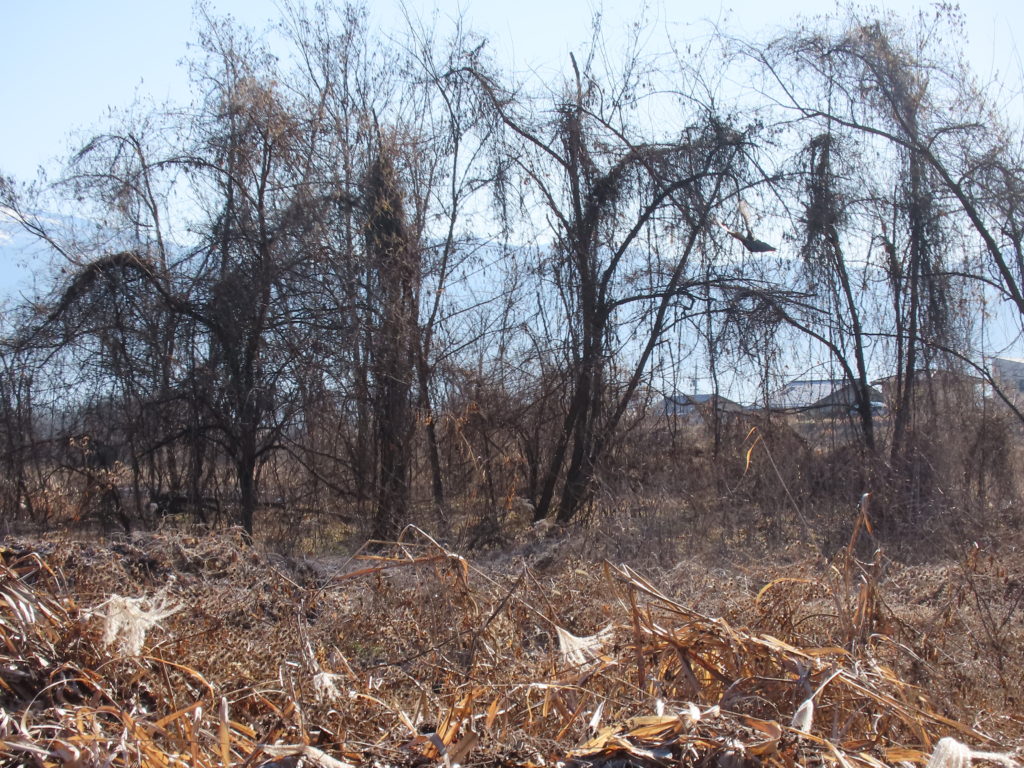
Because they are so sudden, I’ve never been able to get a good photo of them until now. This is the first time I’ve managed to capture them flying✌️
*****
2026/01/20-01/24 Butterburs bud
January 20th-24th, 2026 is Winter-Daikan (Greater cold)-70th KOU “Butterburs bud.”
When I woke up this morning, I didn’t feel warm in the room. The fan heater should turn on automatically 10 minutes before 6 a.m…. Yes, it’s working well.
I see! we’ve entered the coldest period of the year, the Greater Cold.
The temperature outside at 6 a.m. this morning was -4°C. There’s also a light snowfall. It’s light and fine snow, the kind that falls when it’s quite cold.
These past few days, the maximum temperature has been 11°C or 14°C on some days, but also 2°C or 4°C on others, and the minimum temperature has been -5.5°C or -6.4°C on some days. There has been a lot of fluctuation.
FUKI-NO-TOU (butterburs bud) have started to appear, the temperature fluctuated greatly, and today it even snowed, though. They show up at the same place and at the same time of year as always❤️

*****
2026/01/25-01/29 Ice thickens on streams
January 25th-29th, 2026 is Winter-DAIKAN (Greater cold)-71st KOU “Ice thickens on stream.”
The 71st KOU represents the time when the water in streams and waterfalls also freezes.
The height of the DAIKAN season, it’s definitely cold, but perhaps because there’s less humidity, it feels not so heavy one. The crisp, piercingly cold air makes me feel clear-headed, and I actually like it.
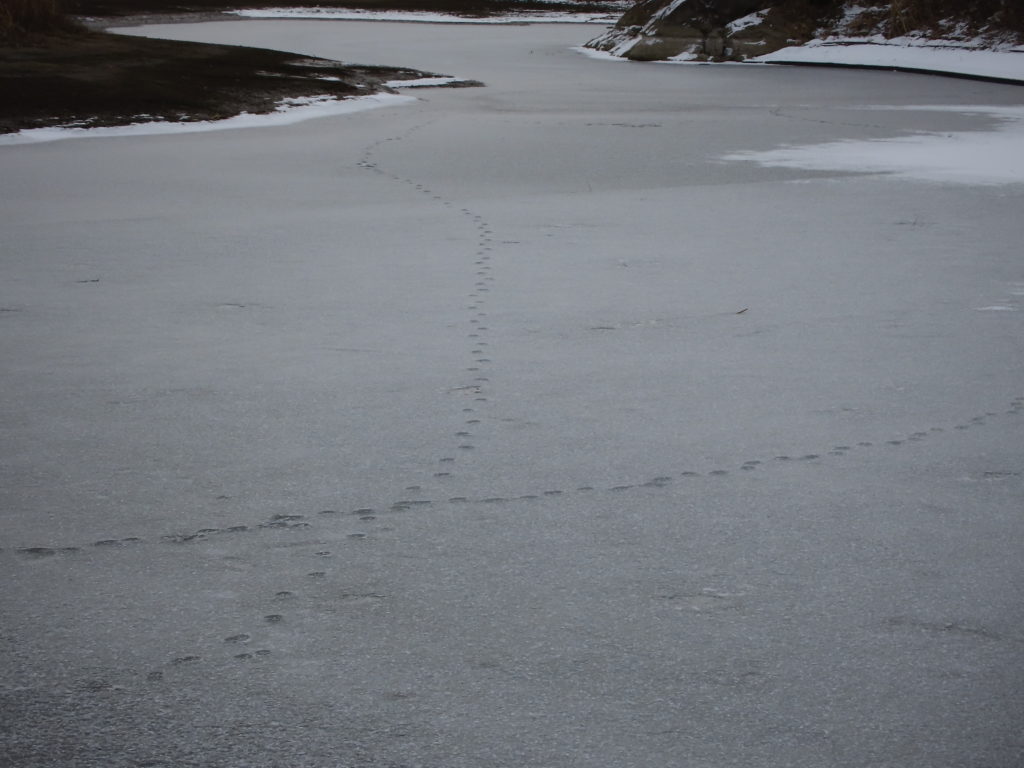
I found footprints on the completely frozen river. It surely is now easier to meet friends on the other side, isn’t it 😉
*****
2026/01/30-02/03 Hens start laying eggs
January 30th-February 3rd, 2026 is Winter-Daikan (Greater cold)-72nd KOU “Hens start laying eggs.”
The lunisolar calendar has finally come to an end, marking the end of the coldest period and harsh winter. From now on, the weather will gradually get warmer, and we will move towards spring.
“Hens start laying eggs” symbolizes the birth of life, and so the season approaches the end of the year with hopes for the arrival of a new spring.
Even in the sub-zero cold, the rooters are crowing as always. And nearby sparrows are gathering and waiting for food left behind by the chickens.
*****
February
2026/02/04-02/08 Spring wind melts the ice
February 4th, 2026–February 8th is Spring – RISSHUN (Beginning of spring)-1st KOU “Spring wind melts the ice”
Now, the lunisolar calendar comes into “Spring.” The first of the 72 KOU (micro-season) starts with RISSHUN (beginning of spring). Spring breezes blow, thawing the frozen earth.
That said, the temperature just before 7 am was -7°C and the sky was so clear.
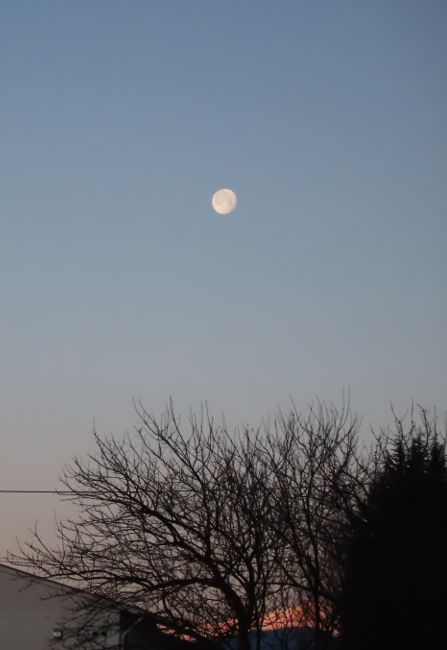
The moon! Looks like perfectly round. As the sky brighten, it was disappearing at the Northern Alps (bottom of the image) shining in the morning glow.
The lunisolar calendar is based on the phases of the moon and the movement of the sun. This morning, which was close to a full moon, is roughly halfway through the lunar cycle, or around the 15th date.
*****
2026/02/09-02/13 UGUISU (Bush warblers) start singing in the mountains
February 9th, 2026 –February 13th is Spring – RISSHUN (Beginning of spring)-2nd KOU “UGUISU (Bush warblers) start singing in the mountains”
On the 4th, 5th, and 6th, the first several days of spring according to the lunisolar calendar, the temperature was between 7 and 11 degrees. It’s warm enough to be comparable to early March. However, since yesterday, it has suddenly returned to winter. With this cold, UGUISU have not yet come out.
Incidentally, the earliest I heard the first singing of UGUISU between 2022 and 2025 was on February 24, 2025. This was still one to two weeks earlier than usual.
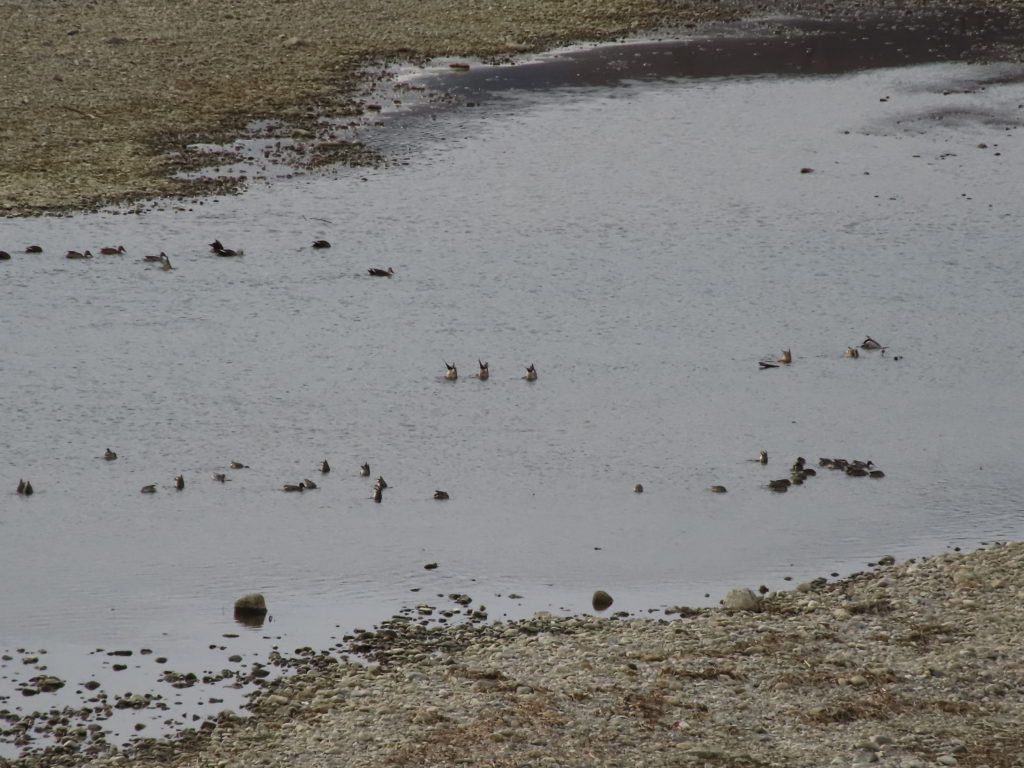
Even though it’s so cold, the winter birds seem unfazed. Are they ONAGAGAMO (northern pintails) ? I don’t see such many of them around here. They’re searching for food with their rears completely exposed 😂
This year, there is a rich variety and number of winter birds.
In NIIGATA and HOKURIKU region, known as a popular spot for migratory birds, heavy snowfalls like this season often bury food under the snow, making it difficult to find food, so an increasing number of them are again migrating to SHINSHU.
*****
2026/2/14-2/18 Fish emerge from ice
February 14th, 2026 –February 18th is Spring – RISSHUN (Beginning of spring)-3rd KOU “Fish emerge from ice” The thick ice is gradually melting, then fish emerge from the ice.
The pond (an agricultural reservoir) I visited last year was still completely covered in ice.
Raccoon dogs?
The footprints continued all the way to the other side. The melted, larger ones signal that spring is just around the corner.

*****
2026/02/19-02/22 Rain moistens the soil
February 19th, 2026 –February 22nd is Spring – USUI (Rainwater)-4rd KOU “Rain moistens the soil”
USUI (Rainwater), one of 24-SEKKI, represents the time when warm spring rains moisten the earth and plants begin to sprout. So in lunisolar calendar, USUI is a sign to start field works.
I went to my vegetable garden that have had very little done over the winter. The snow that fell last night has melted, leaving the soil nice and moist.
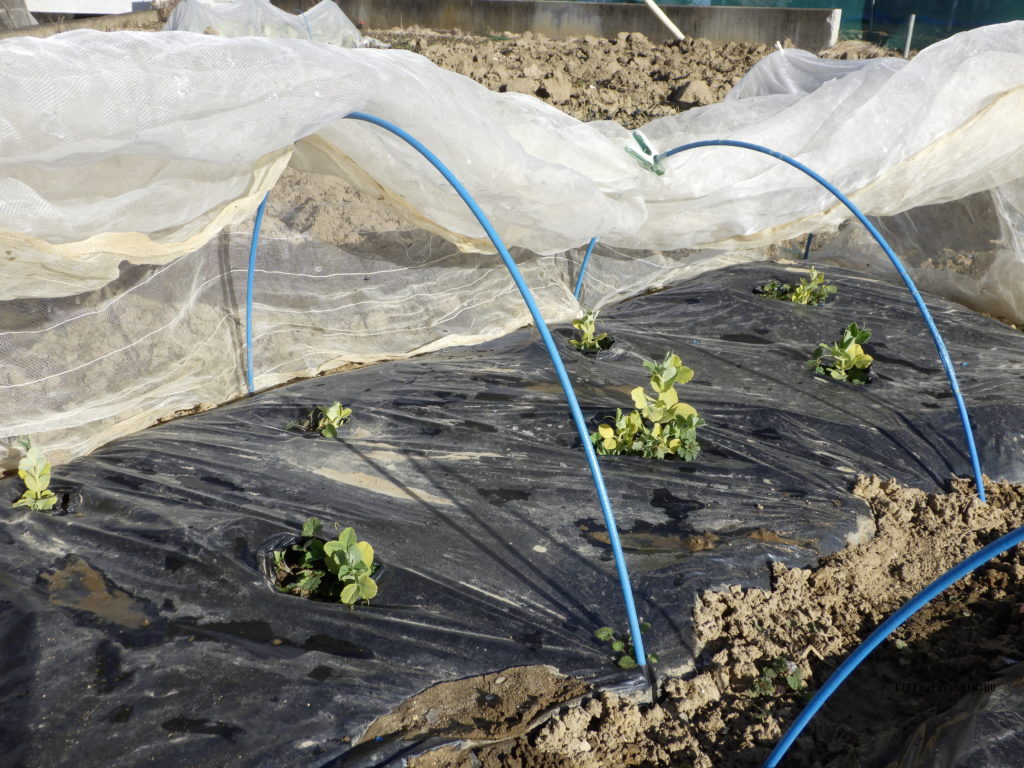
The snow peas planted at the end of December are doing well in the winter tunnel. It’s also nice that the little bit of snow that fell this morning has melted and wetted the seat.
I’m worried because the tips of the onion seedlings, planted in early November, have turned yellow. The savoy spinaches, which can withstand cold, are still small to be picked, and the spring cabbage leaves have spread out too much and are not yet round, ummm 🤔
*****
2026/2/23-2/27 KASUMI to linger
February 23rd, 2026 –February 27th is Spring – USUI (Rainwater)-5th KOU “KASUMI (spring haze) starts to linger” This is a sprig scene where a thin layer of KASUMI (spring haze) hangs over the sky.
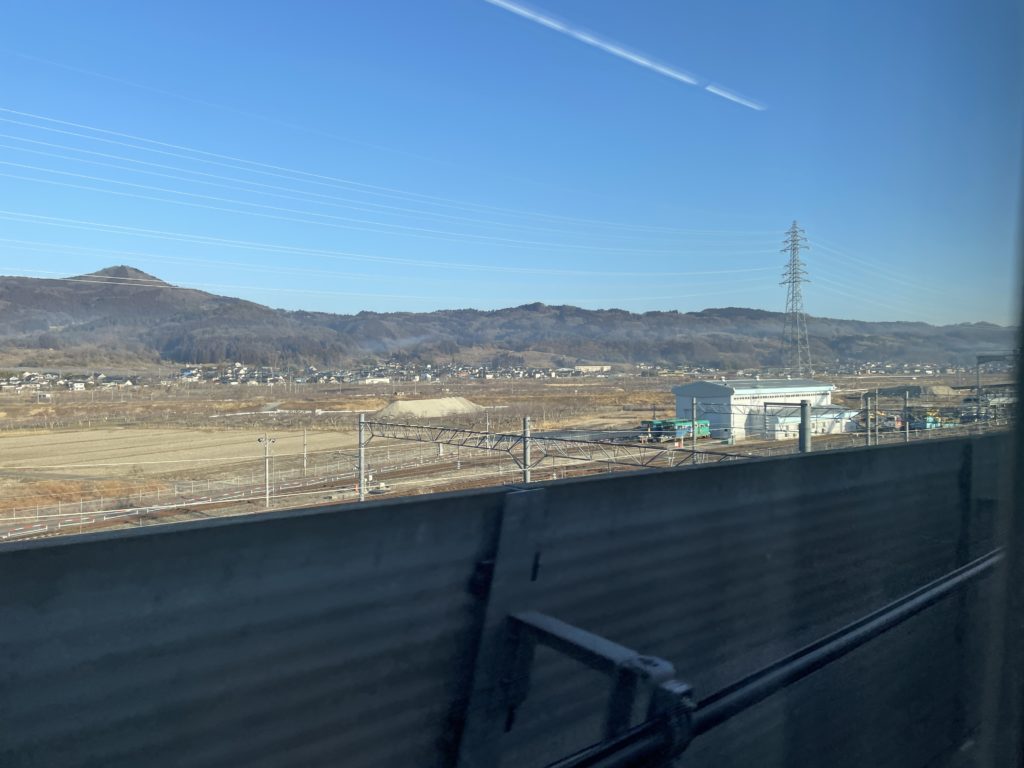
The photo shows the view from the window of a SHINKANEN train (Bullet train). You can see a thin plume of smoke drifting into the distance. It’s amazing how well balanced it is with the air. The SHINKANSEN train seems to be chasing after it.
This area is a major apple producing area, and now is the busy season for pruning. The smoke is likely coming from burning pruned branches and dead grass.
The 5th KOU represents the arrival of spring and the start of agricultural work.
*****
2026/02/28-03/04 Grass sprouts, trees bud
February 28th, 2026 –March 4th is Spring – USUI(Rainwater)-6th KOU “Grass sprouts, trees bud.” At the end of the USUI season, the ground becomes moist with melting snow and warm spring rains. It’s time plants begin to sprout.
It was pretty warm last week. The minimum temperature was around 5°C, which was a big factor. There was also a nice amount of rain.
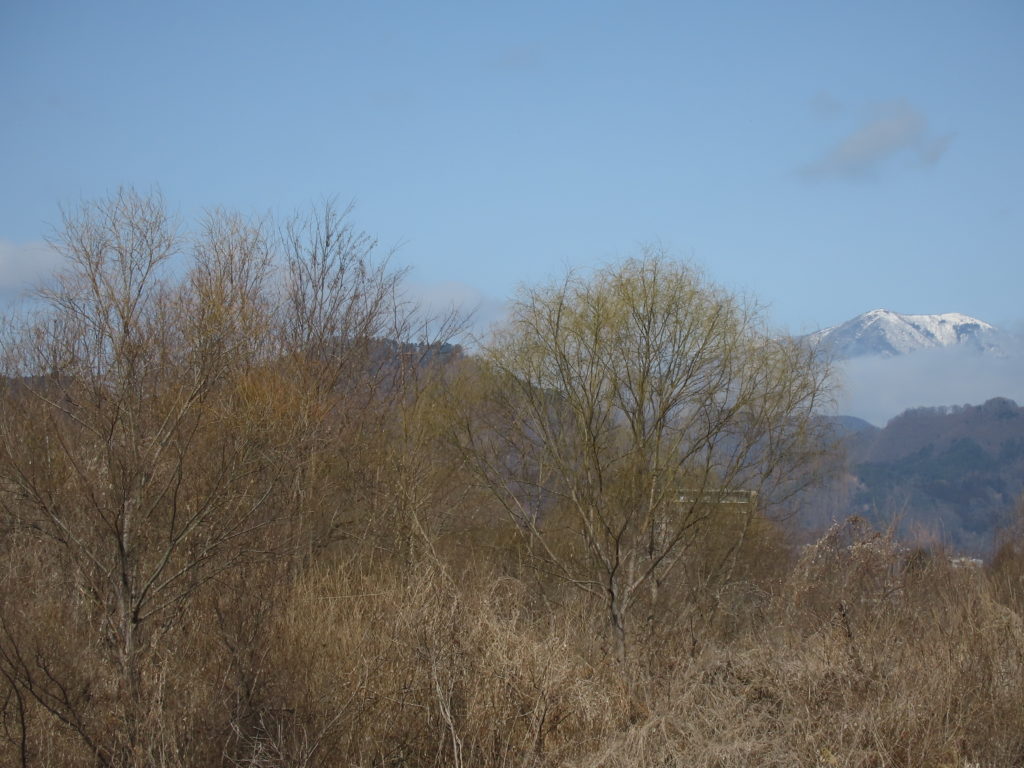
Then, the leaves at the top of the trees are turning a light green. There are also reddish leaves, a color often seen in the early stages of bud formation. Small plants whose names I don’t know are also blooming with tiny blue, reddish-purple and white flowers.
It’s not just the plants. I heard the first song of UGUISU (Japanese bush warbler) on February 28th, and YAMABATO (turtle dove) is cooing right now. I also saw a fox that it’s been years since I’ve seen one this close.
The forests and fields have suddenly been becoming lively.
*****
March
2026/03/05-03/09 Hibernating insects surface
March 5th, 2026-March 9th is Spring-KEICHITSU(Insects awaken)-7th KOU “Hibernating insects surface.” It depicts hibernating insects crawling out of the soil as they sense the warmth.
This includes not only insects but also frogs, lizards, and snakes, none of which I have seen yet this year (things in the lunisolar calendar are about a month earlier than that in this area). By the way, the frog egg mass was found on March 3rd in 2024, March 13th in 2025, and not yet this year.
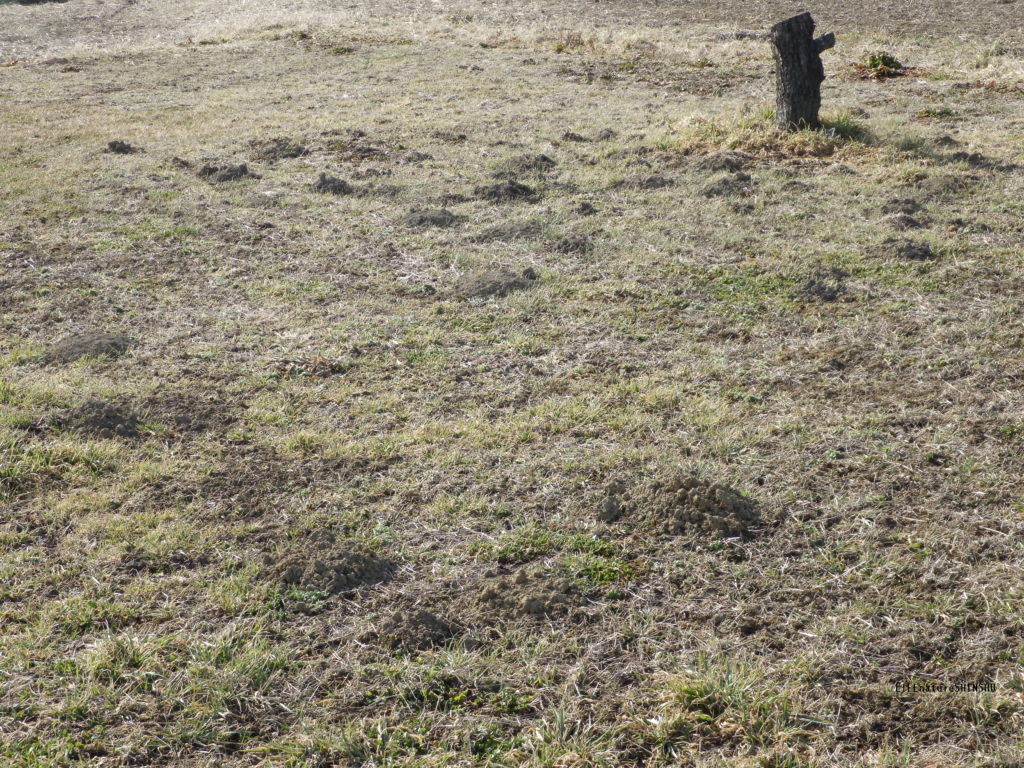
There were many traces of the soil being dug up all over the field. Those were molehills. Moles don’t hibernate, but they become less active during the winter. Now that it’s warmer, they’ve probably started roaming around again. Strangely enough, this is the only place where there are so many hills, and it’s their favorite field.
*****
2026/03/10-03/14 First MOMO (peach) blossoms
March 10th, 2026-March 14th is Spring-KEICHITSU (Insects awaken)-8th KOU “First MOMO (peach) blooms.” The 8th KOU represents the cozy atmosphere of spring, warm enough for MOMO blossoms to bloom.
In reality, the minimum temperature around here has been below 0°C for the past few days.
Although it was sunny today, the strong wind made it feel considerably colder.
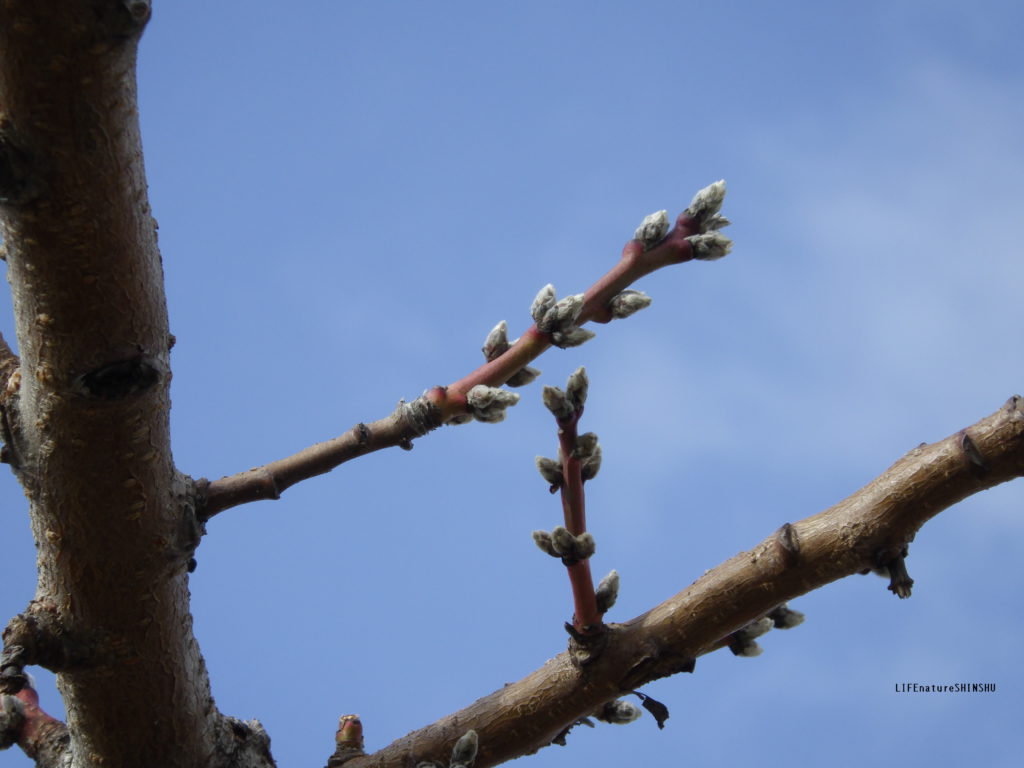
The MOMO trees have begun to bud. Their branches stretch towards the blue sky, eagerly awaiting the arrival of their real spring.
According to a report from the Nagano Prefectural Government, the blossoms are expected to bloom around mid-April in 2026. That’s about a month away from full bloom!
*****
2026/03/15-03/19 Caterpillars become butterflies
March 15th, 2026-March 19th is Spring-Last stage of KEICHITSU (Insects awaken)-9th KOU “Caterpillars become butterflies.” The 9th KOU represents the arrival of real spring. It gets warm enough for caterpillars to turn into butterflies.
Here’s my first cabbage white butterfly this year! The rapeseed flowers that they love haven’t bloomed, though.
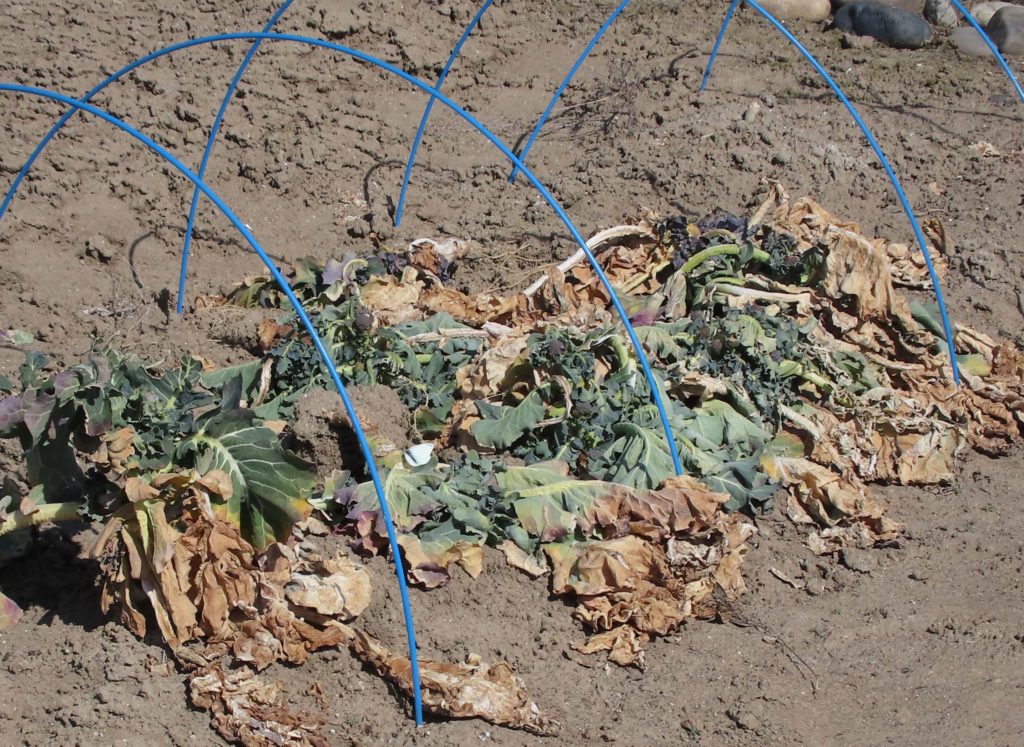
Was it just a newborn? It would be more accurate to say it was blown away by the wind rather than fluttering around. I looked for where it had been blown and found it! It was staying on top of some broccoli that had been left out after harvesting.
Broccoli is the same kind of rapeseed. This butterfly is quite clever, isn’t it?
In the fields, TANETSUKEBANA have begun to bloom. Since these are wild rapeseed flowers, we can see many butterflies fluttering here and there soon.
*****
2026/03/20-03/25 SUZUME (sparrows) start to nest
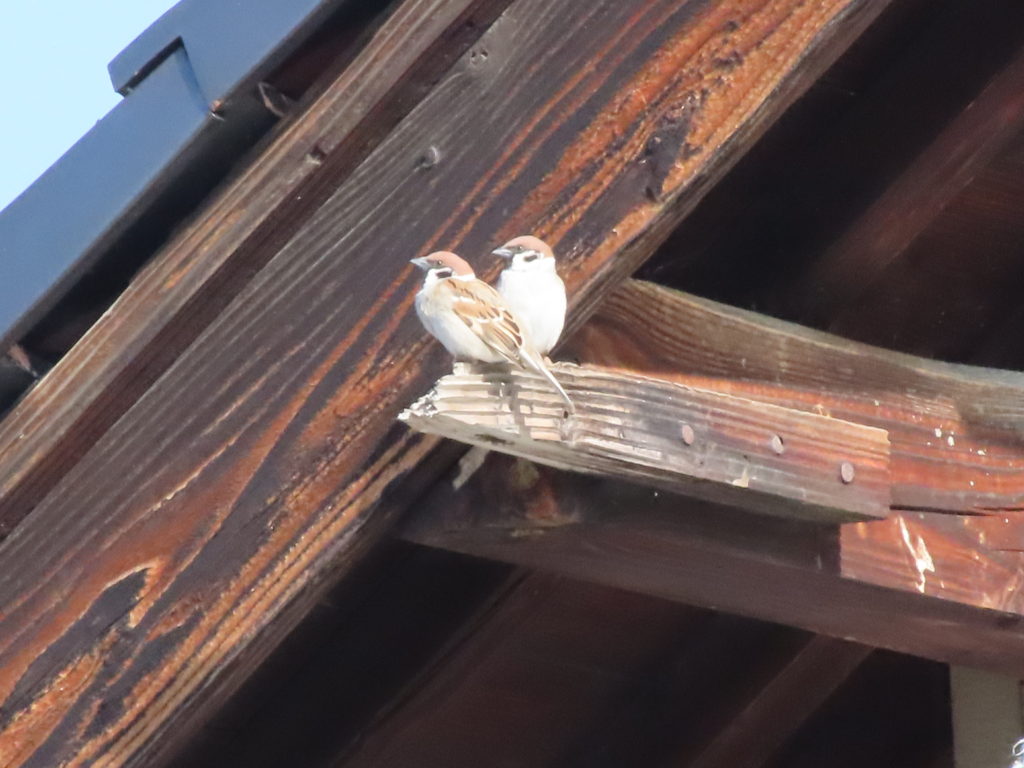
March 20th, 2026-March 25th is Spring-First stage of SHUNBUN (Spring equinox)-10th KOU “SUZUME start to nest.” In the 10th KOU, SUZUME have begun to build their nests.
The usual SUZUME are gathered at the usual hut. It seems they intend to raise their young here again this year. Everything looks the same as the last year.
However, is something different happening over there? The noisy starlings that usually claim their territory are nowhere to be seen, though.
Today is March 20th, the spring equinox. The days will get longer from now on.
The season of “KEICHITSU (insect awaken)” is over, and larvae and insects that serve as food for them will begin to move. SUZUME, hurry up and start building your nests!